5 Uses of a Santok Knife: Techniques for Chopping, Slicing, and More
If you’ve ever wondered about the best tools for your kitchen, the santoku knife might just be the answer. This versatile Japanese knife is becoming increasingly popular among home cooks and professional chefs alike, thanks to its unique design and functionality.
The santoku knife excels in chopping, slicing, and dicing, making it perfect for various ingredients. Its wide blade allows for easy transfer of food, while the granton edge helps prevent sticking. Discover the many ways this knife can enhance your cooking experience.
Defining Santok Knife
The Santok knife is a versatile kitchen tool that originated in Japan. Its name translates to “three virtues,” which refer to its ability to slice, dice, and chop. Characterized by a wide blade with a flat edge and a rounded tip, it offers excellent control and precision for various cooking tasks. This knife is particularly effective for preparing vegetables, meats, and fish.
One of the unique features of the Santok knife is its Granton edge, which consists of small divots along the blade. These divots reduce friction and prevent food from sticking, making slicing and dicing more efficient. The Santok knife is typically lighter than a traditional chef’s knife, which allows for quicker movements and less fatigue during extended use.
Overall, the Santok knife is an essential tool for both home cooks and professional chefs, providing a perfect combination of functionality and ease of use in the kitchen.
Blade Functions Explained
The shape and sharpness of a santok knife significantly influence its cutting techniques. Understanding these aspects allows for effective use in various culinary tasks. Here’s a breakdown of how these features impact the knife’s performance:
- Blade Shape: The santok knife has a wide, flat blade that enables a stable cutting surface. This design facilitates precise cuts, making it ideal for slicing, dicing, and mincing vegetables and proteins.
- Edge Sharpness: A santok knife typically features a sharp edge that allows for clean cuts with minimal effort. Maintaining this sharpness is critical for effective performance, as dull blades can crush rather than slice.
- Tip Design: The slightly curved tip of the blade allows for a rocking motion when chopping, enhancing efficiency in food preparation. This design is beneficial for tasks that require quick, repetitive movements.
- Length and Balance: Generally, santok knives range from 5 to 7 inches in length, providing a balance that supports control and precision. This length is suitable for a variety of ingredients without being unwieldy.
Chopping Techniques
Chopping with a santok knife involves specific techniques that enhance precision and efficiency. This knife, known for its wide blade and sharp edge, excels in various chopping methods, making it a versatile tool in the kitchen. Mastering these techniques can elevate your food preparation skills significantly.
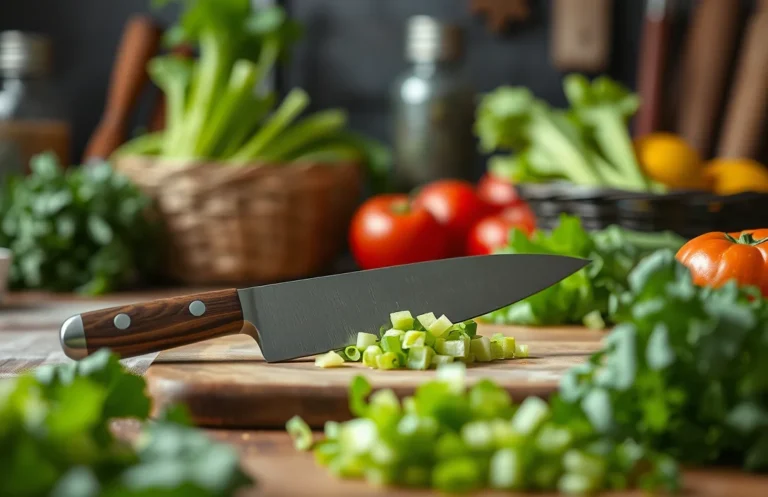
The rocking chop is one of the most effective methods. Hold the knife with a firm grip, positioning the tip on the cutting board while the blade’s edge lifts and lowers in a rocking motion. This technique is ideal for chopping herbs, garlic, and vegetables, allowing for a quick and even cut.
Another technique is the push cut, where you apply pressure on the blade as you push through the ingredient. This is particularly useful for denser items like carrots or potatoes, providing a clean cut without excessive force.
For larger items, the slice and chop method can be effective. Slice through the ingredient first, then chop into smaller pieces. This method works well with meats or larger vegetables, ensuring uniformity in size and cooking times.
Practice these techniques to enhance your efficiency and precision in the kitchen with a santok knife, setting the stage for more advanced cutting methods like slicing and dicing.
Slicing and Dicing
Effectively slicing and dicing ingredients with a santok knife requires proper technique. This knife’s design, featuring a broad blade and a sharp edge, makes it ideal for precision cuts. Follow these steps to achieve uniform slices and dices, enhancing your culinary skills.
- Choose Your Ingredient: Select fruits, vegetables, or proteins that you want to slice or dice.
- Position the Knife: Hold the santok knife with a firm grip, keeping your thumb and forefinger on the blade for control.
- Use the Claw Grip: With your other hand, curl your fingers inward, holding the ingredient in a claw grip to protect your fingers.
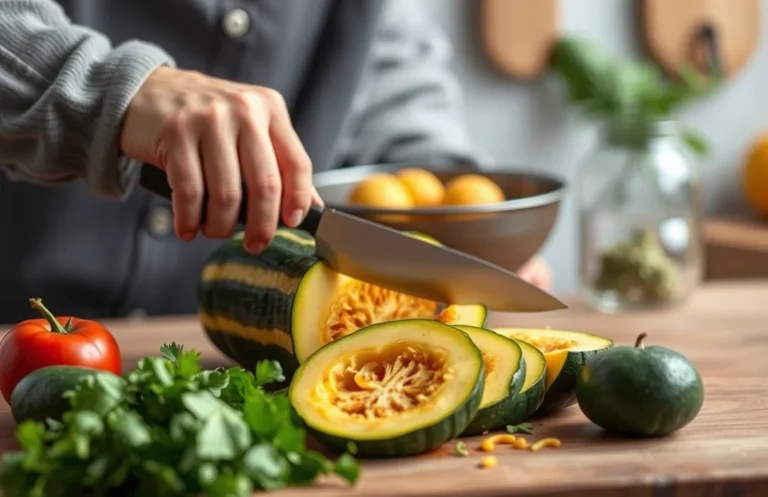
- Slice with Precision: For slicing, use smooth, forward motions with the knife, applying minimal pressure. For dicing, first slice the ingredient into uniform planks, then stack and slice again to create small cubes.
- Practice Consistency: Aim for uniform sizes in your slices and dices for even cooking and presentation. Adjust your technique as needed for different ingredients.
Mastering these techniques with your santok knife will not only improve your efficiency in the kitchen but also elevate the quality of your dishes.
Comparing Santok to Chef Knife
The santok knife and the chef knife serve similar purposes in the kitchen, but they have distinct features that cater to different preferences and techniques. Understanding these differences can help you choose the right tool for your culinary tasks.
The santok knife is characterized by its shorter, wider blade and a flat edge, which makes it ideal for precise slicing, dicing, and chopping. It excels in tasks that require a swift up-and-down motion, making it particularly effective for vegetables and herbs. The unique granton edge, which has small divots along the blade, prevents food from sticking, enhancing efficiency and speed.
In contrast, the chef knife is longer and more versatile, designed to handle a broader range of tasks, including mincing, slicing, and rock-chopping. Its curved blade allows for a rocking motion, which is beneficial for cutting meat and larger items. The chef knife is often considered more versatile, suitable for various cutting techniques beyond just chopping.
Ultimately, choosing between a santok and a chef knife depends on your cooking style. If you prioritize speed and precision for vegetables, the santok knife is a great choice. If you need an all-purpose tool that can handle a variety of tasks, the chef knife may be more suitable.
Quick Summary
- A Santoku knife is a versatile kitchen tool primarily used for slicing, dicing, and mincing.
- Its name translates to “three virtues,” referring to its ability to excel in three cutting techniques: slicing, dicing, and chopping.
- The blade is typically shorter and wider than traditional chef’s knives, providing better control and precision.
- Many Santoku knives feature a granton edge, which helps prevent food from sticking to the blade.
- They are suitable for a variety of ingredients, including vegetables, meat, and fish.
- Due to its design, the Santoku knife is particularly favored in Asian cuisines but is widely used in many culinary traditions.
- Proper care and maintenance, such as regular honing and hand washing, can prolong the life of a Santoku knife.
Frequently Asked Questions
What is a santoku knife?
A santoku knife is a versatile Japanese kitchen knife that typically features a flat edge and a rounded tip. It is designed for precision cutting, making it suitable for various tasks like slicing, dicing, and mincing.
What are the primary uses of a santoku knife?
The santoku knife excels at chopping vegetables, slicing meat, and mincing herbs. Its design allows for efficient and smooth cutting, making it a great all-purpose tool in the kitchen.
How does a santoku knife differ from a chef’s knife?
While both knives are versatile, the santoku has a shorter blade with a flatter profile compared to the traditional chef’s knife. This design allows for a different cutting technique, often favored for precision tasks.
Is a santoku knife suitable for beginners?
Yes, a santoku knife is an excellent choice for beginners due to its ease of use and versatility. Its balanced design and sharp blade make it user-friendly for various cutting tasks.
How should I care for my santoku knife?
To maintain your santoku knife, hand wash it with warm, soapy water and dry it immediately to prevent rust. Additionally, regularly honing the blade will keep it sharp, and using a wooden or plastic cutting board will help preserve its edge.

- 10 Best Cheese Knife With Holes For Smooth Slice 2026 - March 9, 2026
- Make Cheesecake Up to 3 Days Ahead: Tips for Best Flavor & Texture - March 4, 2026
- Easy No-Bake Cool Doen Cheesecake: Quick Recipe & Tips - March 4, 2026