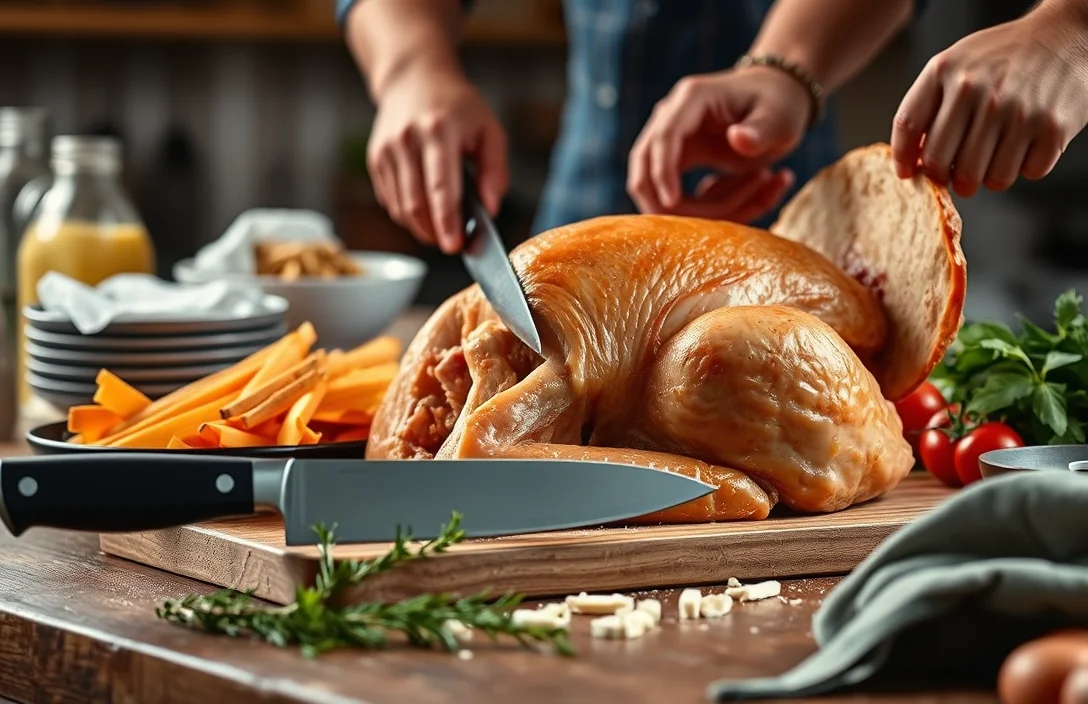
7 Best Knives for Cutting Turkey: Types, Techniques, and Care
Choosing the right knife for carving turkey can significantly enhance your cooking experience. A well-selected knife not only makes the process easier but also ensures that you serve beautifully sliced pieces, impressing family and friends at your holiday gatherings.
The best knife for cutting turkey is typically a carving knife, known for its long, thin blade that allows for precise cuts. A chef’s knife can also work well, while a slicing knife provides the flexibility needed for thin slices.
Best Knife Types for Turkey
Selecting the right knife is crucial for efficiently cutting turkey. The best knives offer precision, control, and ease of use, ensuring clean cuts that enhance presentation and serving. Here are the top types of knives recommended for turkey carving.
Carving Knife: A long, thin blade makes this knife perfect for slicing through turkey meat with minimal effort. Its design allows for smooth, even cuts, which are essential for serving. Look for one that is at least 12 inches long.
Chef’s Knife: Versatile and multi-functional, a chef’s knife can also be used to carve turkey. Its broad blade provides stability and control, making it suitable for both slicing and chopping.
Electric Knife: For those who prefer speed and ease, an electric knife can be a great option. This tool quickly cuts through the meat and is especially beneficial for larger birds, ensuring uniform slices without much physical effort.
Choosing any of these knife types will enhance your turkey carving experience, ensuring that you achieve the best results during your meal preparation.
Blade Materials Explained
Understanding blade materials is crucial for selecting the best knife to cut turkey. The material impacts not only the knife’s sharpness but also its durability, maintenance, and overall performance during the carving process. Here are the most common materials used in turkey knife blades.
Stainless Steel: This is the most popular choice for turkey knives. It is resistant to rust and corrosion, making it low-maintenance. High-carbon stainless steel combines the best of both worlds—sharpness and durability. Look for blades with a high Rockwell hardness rating for optimal performance.
High-Carbon Steel: Known for its exceptional sharpness and edge retention, high-carbon steel can achieve a finer edge than stainless steel. However, it requires more maintenance to prevent rust and can be more brittle if not properly cared for.
Ceramic: Ceramic blades are lightweight and maintain sharpness longer than metal blades. They are resistant to rust and do not impart any metallic taste. However, they can be fragile and are not suitable for tasks that require bending or twisting.
Choosing the right material will enhance your turkey carving experience, ensuring clean cuts and minimal tearing of the meat.
Knife Size Considerations
Choosing the right knife size is crucial for effective turkey slicing. The ideal knife should balance length and maneuverability, allowing for smooth cuts through the turkey’s dense meat and joints. A knife that is too short may struggle with larger birds, while one that is excessively long can be unwieldy and difficult to control.
A carving knife, typically ranging from 8 to 14 inches in length, is often the best choice for turkey. This length provides ample reach to slice through the breast and legs without requiring excessive force. A longer blade can help achieve clean, even slices, which is essential for presentation.
Additionally, consider the width of the blade. A wider blade offers stability and strength, making it easier to cut through tougher areas, such as the joints, while a narrower blade provides better precision for delicate slicing. Select a knife that feels comfortable in your hand, as this will enhance control and reduce fatigue during the carving process.
Carving Techniques for Turkey
Using the right knife technique is crucial for efficiently carving a turkey. Focus on maintaining control and precision to achieve clean slices. The following technique will help you carve the turkey effectively, ensuring each piece is beautifully presented.
Begin by positioning the turkey on a stable cutting board. Use a sharp carving knife or a long chef’s knife to cut through the meat. Start by slicing along the thigh joint to separate the leg and thigh from the body. Hold the turkey steady with a fork or carving claw. Once separated, make clean, even cuts along the length of the thigh and drumstick, following the natural grain of the meat.
For the breast, make a long, smooth cut along one side of the breastbone, using the knife to follow the contour of the bone. Slice downward in even, thin slices, angling the knife slightly to achieve uniform pieces. Repeat on the other side. This method ensures that each slice remains juicy and tender, making for an appealing presentation on the serving platter.
Maintenance for Turkey Knives
Proper maintenance of turkey knives ensures they remain sharp and effective for carving. Regular care extends the life of your knife and enhances performance during use. Here are essential practices to maintain your turkey knives in top condition.
First, always clean your knife immediately after use. Hand wash with warm, soapy water and dry thoroughly with a soft cloth. Avoid soaking the knife or placing it in the dishwasher, as this can damage the blade and handle.
Next, regularly sharpen your knife using a whetstone or honing rod. A sharp blade is crucial for clean cuts, especially when carving turkey. Aim to sharpen your knife before major meals or gatherings.
Store your knife properly to prevent damage. Use a knife block, magnetic strip, or blade guards to protect the edge and prevent accidents. Avoid storing knives loosely in drawers, which can dull the blade.
Lastly, occasionally oil the blade with food-safe mineral oil to maintain its finish and prevent rusting. This is especially important for high-carbon steel knives, which are more susceptible to corrosion.
Comparing Popular Turkey Knives
Choosing the right turkey knife can significantly enhance your carving experience. Here, we compare some of the most popular turkey knives available, focusing on their features, blade types, and overall performance. This comparison will help you identify which knife best fits your needs for slicing turkey.
| Knife Model | Blade Length | Material | Design Type | Price Range |
|---|---|---|---|---|
| Wüsthof Classic Carving Knife | 9 inches | High Carbon Stainless Steel | Semi-Serrated | $150 – $200 |
| Victorinox Swiss Army Carving Knife | 10 inches | Stainless Steel | Straight Edge | $30 – $50 |
| Shun Classic Carving Knife | 9 inches | VG-MAX Steel | Straight Edge | $150 – $250 |
| Henckels Classic Carving Knife | 8 inches | High Carbon Stainless Steel | Straight Edge | $50 – $100 |
For optimal performance, consider factors such as blade material, length, and design type. High-carbon stainless steel options offer durability and sharpness, while different blade lengths cater to various carving styles. Assess your budget and preferences to find the turkey knife that will serve you best during your holiday feasts.
User Reviews and Insights
User reviews provide valuable insights into the effectiveness of various turkey knives. Many users emphasize the importance of a sharp, long blade for clean cuts, which helps in serving the turkey without tearing the meat. Reviews often highlight specific brands and models that stand out for their performance during Thanksgiving feasts.
For instance, the Wüsthof Classic 14-Inch Slicing Knife frequently receives praise for its precision and ease of use. Users report that its ergonomic handle allows for comfortable grip, making it easier to slice through the turkey with minimal effort. Others recommend the Victorinox Swiss Army Slicing Knife for its affordability and sharpness, noting that it performs exceptionally well for both novice and experienced cooks.
Some users also suggest that a carving fork should accompany the knife to hold the turkey steady while slicing. This combination ensures clean slices and enhances the presentation. Overall, user experiences indicate that investing in a quality turkey knife can significantly improve the carving process, making it smoother and more enjoyable during holiday gatherings.
Quick Summary
- The best knife for cutting turkey is typically a carving knife, designed for slicing cooked meats.
- Look for a knife with a long, thin blade to ensure clean, even slices.
- Consider a knife with a sharp edge and a comfortable handle for better control.
- Some people prefer electric carving knives for their ease of use and efficiency.
- A boning knife can also be useful for removing bones before slicing the turkey.
- Quality materials, such as stainless steel, enhance durability and maintain sharpness.
- Proper knife maintenance, including regular sharpening, is essential for optimal performance.
Frequently Asked Questions
What is the best type of knife for cutting turkey?
The best type of knife for cutting turkey is a carving knife. These knives are long, thin, and have a sharp edge that allows for smooth, even slices, making it easier to carve through the meat without tearing it.
Should I use a serrated or a straight knife?
A straight carving knife is typically preferred for cutting turkey, as it provides a clean cut and allows you to control the thickness of each slice. Serrated knives can tear the meat, which can lead to uneven slices and a less appealing presentation.
How long should a turkey carving knife be?
A carving knife should generally be between 8 to 14 inches long. A longer blade allows for larger, more uniform slices, while a shorter blade can provide better control for detailed work around the joints.
Are there any specific brands recommended for turkey carving knives?
Some well-regarded brands for turkey carving knives include Wüsthof, Henckels, and Victorinox. These brands offer high-quality knives that are known for their durability and sharpness, making them ideal for carving turkey and other meats.
Do I need a special cutting board for carving turkey?
While not mandatory, using a large, sturdy cutting board with a groove around the edges can be beneficial. This helps catch any juices that may run off the turkey while carving, keeping your workspace cleaner and making it easier to slice the meat without mess.

- 10 Best Cheese Knife With Holes For Smooth Slice 2026 - March 9, 2026
- Make Cheesecake Up to 3 Days Ahead: Tips for Best Flavor & Texture - March 4, 2026
- Easy No-Bake Cool Doen Cheesecake: Quick Recipe & Tips - March 4, 2026