Does Cheesecake Need Eggs? Discover Egg-Free Variations!
Cheesecake is one of those desserts that can instantly brighten your day. Its creamy, velvety texture combined with a buttery crust makes it not just a treat but a true indulgence. Whether it’s a family gathering or a quiet weeknight, a slice of cheesecake always feels like a hug on a plate.
Wondering if cheesecake contains eggs? You’ll find both egg-based and eggless recipes here, along with tips on how eggs affect texture and flavor. Total time: 1 hour 30 minutes; Difficulty: Easy; Servings: 8.
| Prep Time | Cook Time | Total Time | Servings | Difficulty |
|---|---|---|---|---|
| 15 minutes | 60 minutes | 1 hour 30 minutes | 8 | Easy |
History of Cheesecake
The history of cheesecake is rich and varied, reflecting cultural influences that have shaped this beloved dessert over centuries. Understanding its origins not only provides insight into its evolution but also helps clarify why some recipes include eggs while others do not.
- Ancient Roots: The earliest known cheesecake dates back to ancient Greece around 2000 B.C. Made from simple ingredients like cheese, flour, and honey, it was served to athletes at the Olympic Games, highlighting its significance as a celebratory dish.
- Roman Adaptation: The Romans adopted the Greek cheesecake and added their own twist by incorporating eggs and cream, transforming it into a richer dessert. This version spread throughout the Roman Empire, influencing various cultures.
- European Variations: In the Middle Ages, cheesecakes appeared across Europe, with each region adding unique flavors and ingredients. The English version often included eggs for a firmer texture, while the Italians sweetened theirs with ricotta and flavored it with citrus.
- Modern American Cheesecake: The American cheesecake, particularly the New York style, emerged in the 19th century, featuring a dense, creamy texture achieved through the use of cream cheese and often eggs. This style has become a standard in many recipes today.
Understanding these historical contexts can help home cooks appreciate the different cheesecake recipes available, especially regarding the use of eggs and their impact on texture and flavor.
Ingredients for Cheesecake
This section outlines the essential ingredients for both egg-based and eggless cheesecakes. Understanding these ingredients is crucial as they significantly influence the texture and flavor of the cheesecake you create, whether you choose to include eggs or not.
Egg-Based Cheesecake Ingredients
| Item | Amount/Specification | Notes |
|---|---|---|
| Cream Cheese | 16 ounces (450g) | Softened to room temperature |
| Sugar | 1 cup (200g) | Granulated |
| Eggs | 3 large | Room temperature |
| Sour Cream | ½ cup (120g) | For added creaminess |
| Vanilla Extract | 1 teaspoon | Pure, for flavor |
| Graham Cracker Crust | 1 ½ cups (150g) | Store-bought or homemade |
Eggless Cheesecake Ingredients
| Item | Amount/Specification | Notes |
|---|---|---|
| Silken Tofu | 16 ounces (450g) | Blended until smooth |
| Cashews | 1 cup (150g) | Soaked for 2-4 hours |
| Sugar | ¾ cup (150g) | Granulated |
| Vanilla Extract | 1 teaspoon | Pure, for flavor |
| Lemon Juice | 2 tablespoons | Freshly squeezed |
| Graham Cracker Crust | 1 ½ cups (150g) | Store-bought or homemade |
- For a firmer texture, let the cheesecake chill in the refrigerator for at least 4 hours, preferably overnight.
- If using egg substitutes, consider using a flaxseed meal (1 tablespoon flaxseed meal + 2.5 tablespoons water = 1 egg).
- Ensure all ingredients are at room temperature for a smoother batter.
Essential Kitchen Tools
Before diving into the process of making cheesecake, it’s crucial to have the right tools on hand. The equipment you choose can greatly affect the texture and overall outcome of your cheesecake, especially when it comes to the use of eggs. Here’s a list of must-have tools to ensure a smooth baking experience.
- Springform Pan: A 9-inch springform pan is ideal for cheesecakes, as it allows easy removal without damaging the delicate texture. Make sure the pan is properly greased to prevent sticking.
- Mixing Bowls: Use at least two mixing bowls—one for the cream cheese mixture and another for the egg mixture. Choose medium-sized bowls to allow for easy whisking and folding.
- Electric Mixer: A hand mixer or stand mixer is invaluable for achieving a smooth, creamy texture in your batter. Start on low speed to avoid splattering, then increase to medium-high until the mixture is fluffy.
- Spatula: A silicone spatula is perfect for folding in ingredients without deflating the batter. Use it to scrape down the sides of the bowl to ensure even mixing.
- Measuring Cups and Spoons: Accurate measurements are key. Have a set of dry measuring cups and a set of liquid measuring cups ready for precise ingredient amounts.
- Baking Sheet: Place your springform pan on a baking sheet to catch any drips during baking. This will make clean-up easier and prevent any mess in your oven.
- Cooling Rack: After baking, a cooling rack allows your cheesecake to cool evenly. This step is crucial in preventing cracks as it cools.
Cooking Steps for Cheesecake
This section provides detailed cooking steps for both egg-based and eggless cheesecakes, highlighting how the presence or absence of eggs affects texture and flavor. Follow these precise instructions for a delicious result that suits your preference.
- Prepare the crust: Preheat your oven to 350°F (175°C). In a medium bowl, combine 1 ½ cups (150g) of graham cracker crumbs, ½ cup (100g) of granulated sugar, and ½ cup (115g) of melted unsalted butter. Stir until the mixture resembles wet sand. Press the mixture firmly into the bottom of a 9-inch (23cm) springform pan and bake for 10 minutes, until lightly golden. Let it cool.
- Make the egg-based cheesecake filling: In a large mixing bowl, beat 24 ounces (680g) of cream cheese at room temperature until smooth. Gradually add 1 cup (200g) of granulated sugar and mix until combined. Add 3 large eggs, one at a time, mixing on low speed after each addition until just blended. The batter should be smooth and creamy with no lumps.
- Bake the cheesecake: Pour the filling over the cooled crust, smoothing the top with a spatula. Bake in the preheated oven for 50-60 minutes, until the edges are set but the center still jiggles slightly. This will ensure a creamy texture. Turn off the oven and crack the door, letting the cheesecake cool slowly for 1 hour.
- Make the eggless cheesecake filling: For a rich eggless version, beat together 24 ounces (680g) of cream cheese, 1 cup (240ml) of sour cream, and 1 cup (200g) of granulated sugar until smooth. Stir in 1 tablespoon of vanilla extract and 1 tablespoon of lemon juice for flavor. The batter should be thick but pourable.
- Bake the eggless cheesecake: Pour the eggless filling over the crust as before, smoothing out the top. Bake at 350°F (175°C) for 45-50 minutes. The cheesecake should be set around the edges and slightly wobbly in the center. Allow it to cool in the oven for 1 hour before removing.
- Chill and serve: Once cooled, refrigerate the cheesecake for at least 4 hours, preferably overnight. This helps the flavors meld and the texture firm up. When ready to serve, run a knife around the edge before releasing the springform pan.
Pro Tips for Perfect Cheesecake
This section is all about avoiding common pitfalls and ensuring your cheesecake, whether it includes eggs or not, turns out perfectly every time. Understanding the role eggs play in cheesecake can help you achieve the desired texture and flavor, while knowing what to watch for can save you from disappointment.
- Eggs are essential for structure: If you’re making a traditional cheesecake, eggs are crucial for providing structure and stability. They help the cheesecake set properly, giving it that creamy yet firm texture. If you’re making an egg-free version, consider using substitutes like silken tofu or a commercial egg replacer, but be prepared for a slightly different texture.
- Room temperature ingredients: For the best results, ensure your cream cheese, eggs, and sour cream are at room temperature before mixing. This helps achieve a smooth batter without lumps. If your cream cheese is too cold, it won’t blend well, leading to a lumpy cheesecake.
- Don’t overmix: Mix your batter just until combined. Overmixing can incorporate too much air, leading to cracks in your cheesecake as it bakes. Once you see no lumps, stop mixing and pour it into the crust.
- Bake in a water bath: If you want to prevent cracks in your cheesecake, consider baking it in a water bath. This keeps the temperature even and adds moisture. To do this, wrap the bottom of your springform pan with aluminum foil and place it in a larger baking dish filled with hot water before baking.
- Cooling is key: After baking, let your cheesecake cool in the oven with the door slightly ajar for about an hour. This gradual cooling helps prevent cracks from forming as it settles. Then chill it in the refrigerator for at least 4 hours, preferably overnight, for the best flavor and texture.
Cheesecake Variations and Substitutions
Cheesecake can be customized in numerous ways to accommodate dietary needs while maintaining its delicious flavor and creamy texture. Understanding the role of eggs in traditional cheesecake recipes and exploring alternatives will help you create a dessert that works for you and your guests.
Gluten-Free Options
If you’re looking to make a gluten-free cheesecake, the good news is that it’s quite simple! You can substitute traditional graham cracker crusts with gluten-free options.
- 1 ½ cups gluten-free graham cracker crumbs (150g)
- 6 tablespoons unsalted butter, melted
- 2 tablespoons sugar
Mix the gluten-free crumbs, melted butter, and sugar in a bowl, then press into the bottom of your springform pan before baking at 350°F (175°C) for 10 minutes until slightly golden. This crust will hold together nicely and provide a satisfying crunch.
Vegan Substitutions
For a vegan cheesecake, you can skip the eggs entirely and replace them with alternatives that still create a rich texture. Here’s a simple substitution guide:
- 1 cup silken tofu, blended until smooth (for richness)
- ¼ cup cornstarch (as a thickening agent)
- ½ cup non-dairy yogurt (for creaminess)
Combine these ingredients to form your filling, and pour it over your crust before baking. Bake at 350°F (175°C) for approximately 45-50 minutes until the edges are set and the center slightly jiggles. Let it cool completely before serving to allow it to firm up.
Pro tip: Always check the consistency of your filling; it should be smooth with no lumps for the best texture.
Serving and Plating Ideas
Presenting your cheesecake beautifully can elevate your dessert experience and impress your guests. Whether you’re serving a classic cheesecake with eggs or a lighter, egg-free version, there are plenty of ways to enhance its look and flavor with garnishes and pairings.
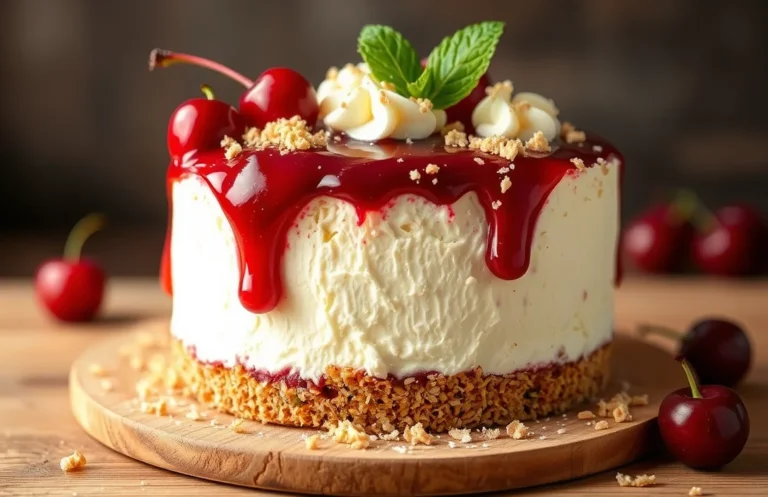
- Garnish with Fresh Fruits: Top your cheesecake with a vibrant mix of fresh berries like strawberries, blueberries, and raspberries. For a beautiful presentation, arrange the fruit in a circular pattern around the edge, leaving the center open for a drizzle of sauce or whipped cream.
- Drizzle with Sauces: A simple berry coulis or chocolate ganache can add a luscious touch to your cheesecake. To make a berry coulis, blend 1 cup of mixed berries with 2 tablespoons of sugar and strain through a fine sieve for a smooth sauce. Drizzle it artistically over each slice right before serving.
- Add Whipped Cream: Lightly sweetened whipped cream enhances the creamy texture of the cheesecake. Whip 1 cup of heavy cream with 2 tablespoons of powdered sugar until soft peaks form. You can pipe it onto the cheesecake or serve it in a small bowl on the side for guests to add themselves.
- Pair with Chocolate: For chocolate lovers, serve your cheesecake with a few chocolate shavings or a sprinkle of cocoa powder. Use a vegetable peeler to create shavings from a chocolate bar and scatter them over the top for an elegant touch.
Chef’s tip: Always let your cheesecake cool completely before serving to ensure it holds its shape and makes slicing easier.
These serving and plating ideas not only make your cheesecake visually appealing but also enhance the overall flavor experience. Enjoy your delicious creation!
Quick Summary
| Prep Time | 20 minutes |
|---|---|
| Cook Time | 60 minutes |
| Total Time | 1 hour 20 minutes |
| Servings | 8 slices |
- Eggs provide structure: Most traditional cheesecake recipes include eggs for texture.
- Room temperature ingredients: Ensure cream cheese and eggs are at room temperature for a smooth batter.
- Water bath technique: Bake in a water bath to prevent cracks on the surface.
- Cool gradually: Allow cheesecake to cool in the oven with the door slightly ajar to avoid sudden temperature changes.
- Chill before serving: Refrigerate for at least 4 hours, preferably overnight, for best flavor and texture.
Frequently Asked Questions
Does cheesecake have eggs?
Yes, traditional cheesecake recipes typically include eggs to help set the filling and create a creamy texture. However, there are egg-free variations available if needed.
Can I make this cheesecake ahead of time? How do I store it?
You can absolutely make cheesecake up to 2 days in advance and store it in the refrigerator, covered tightly. For longer storage, keep it in an airtight container in the fridge or freeze it for up to 3 months.
How do I know when my cheesecake is done?
Your cheesecake is done when the edges are set but the center still has a slight jiggle when you gently shake the pan. It will continue to firm up as it cools.
Can I freeze cheesecake? How long does it last?
Yes, you can freeze cheesecake for up to 3 months. Just make sure to wrap it tightly in plastic wrap and then in aluminum foil to prevent freezer burn.
What if I don’t have a springform pan?
If you don’t have a springform pan, you can use a regular 9-inch round cake pan, but be sure to line it with parchment paper for easier removal. Just be careful when slicing to keep the shape intact!

- Make Cheesecake Up to 3 Days Ahead: Tips for Best Flavor & Texture - March 4, 2026
- Easy No-Bake Cool Doen Cheesecake: Quick Recipe & Tips - March 4, 2026
- Decadent Dulce de Leche Cheesecake: Easy Step-by-Step Recipe - March 4, 2026