Lemon Cake Recipe: Light, Fluffy, and Perfectly Zesty
If there’s one dessert that brings a burst of sunshine to any occasion, it’s lemon cake. This cake is a delightful combination of zesty lemon flavor and fluffy texture that makes it perfect for birthdays, brunches, or simply a sweet treat after dinner. Each bite is like a hug from the inside, making it a beloved favorite in my kitchen.
This lemon cake recipe is a 2-hour adventure with a moderate difficulty level and serves 8 people. You’ll find clear, step-by-step instructions that guarantee a cake that’s moist and bursting with lemony goodness.
| Prep Time | Cook Time | Total Time | Servings | Difficulty |
|---|---|---|---|---|
| 20 minutes | 40 minutes | 1 hour | 8 | Moderate |
Lemon Cake History
Lemon cake is not just a delightful dessert; it carries a rich history and significance that has made it a favorite for many occasions. Rooted in tradition, this cake embodies the bright, zesty flavors of lemons that can elevate any gathering.
- Origin of Lemon Cake: The origins of lemon cake can be traced back to ancient times when lemons were prized for their culinary uses. In the 19th century, with the advent of baking powder, lemon cake gained popularity in America, becoming a staple in many households.
- Why It’s Special: The unique combination of sweet and tart flavors in lemon cake provides a refreshing contrast to richer desserts. Its light, airy texture often evokes feelings of joy and celebration, making it a go-to for spring and summer gatherings.
- When to Serve: Lemon cake is perfect for a variety of occasions, from picnics to birthday parties and even elegant brunches. Its bright flavor makes it an excellent choice for celebrations, particularly during warmer months.
Ingredients List
This section provides a comprehensive list of ingredients you’ll need to create a delicious lemon cake that embodies the charm of Preppy Kitchen. Each ingredient plays a vital role in achieving the perfect balance of flavor and texture, ensuring your cake is both moist and flavorful. Let’s gather everything you’ll need!
| Item | Amount/Specification | Notes |
|---|---|---|
| All-purpose flour | 2 cups (240g) | Sifted for lightness |
| Granulated sugar | 1 ½ cups (300g) | Adjust for sweetness preference |
| Baking powder | 1 tablespoon (12g) | Ensure it’s fresh for best rise |
| Salt | ½ teaspoon (3g) | Enhances overall flavor |
| Unsalted butter | ½ cup (115g) | Softened to room temperature |
| Eggs | 3 large | Bring to room temperature for better emulsion |
| Whole milk | ½ cup (120ml) | Can substitute with almond or oat milk |
| Fresh lemon juice | ⅓ cup (80ml) | About 2-3 lemons, adjust to taste |
| Lemon zest | 2 tablespoons | Use a microplane for fine zest |
| Vanilla extract | 1 teaspoon (5ml) | Enhances flavor |
- Substitutions: For a gluten-free version, use a 1:1 gluten-free flour blend.
- Common Mistake: Do not overmix the batter; it can lead to a dense cake.
- For extra lemon flavor, consider adding lemon extract to the batter.
Kitchen Equipment Needed
To create a delightful lemon cake that captures the essence of Preppy Kitchen, having the right tools on hand is essential. This section outlines the necessary kitchen equipment and preparation steps to ensure your baking experience is smooth and successful.
- Mixing Bowls: You’ll need a set of mixing bowls in various sizes. A large bowl (at least 3-quart) is essential for mixing wet and dry ingredients, while a medium bowl is handy for your lemon glaze.
- Measuring Cups and Spoons: Accurate measurements are crucial for baking. Have both dry measuring cups (for flour and sugar) and liquid measuring cups (for milk and oil) ready, along with a set of measuring spoons for precise ingredient amounts.
- Electric Mixer: A stand mixer or hand mixer will save time and ensure your batter is well blended. Use it to cream the butter and sugar until light and fluffy, which should take about 3-5 minutes on medium speed.
- Rubber Spatula: This tool is perfect for scraping down the sides of your mixing bowl, ensuring that all ingredients are fully incorporated without losing any mix.
- Cake Pans: You will need two 9-inch round cake pans. Grease them with butter and line the bottoms with parchment paper to prevent sticking, ensuring easy removal after baking.
- Oven Thermometer: To ensure accurate baking temperatures, an oven thermometer is ideal. Preheat your oven to 350°F (175°C) and check the temperature before placing your cakes inside.
- Cooling Rack: Once your lemon cakes are baked, transferring them to a cooling rack will help them cool evenly. They should be left to cool for at least 10-15 minutes in the pans before being removed.
Step-by-Step Instructions
This section provides the precise steps needed to mix, bake, and cool your lemon cake, ensuring it turns out perfectly every time. Following these instructions will help you achieve that light, fluffy texture and bright flavor that make this cake so delightful.
- Mixing the Batter: Begin by preheating your oven to 350°F (175°C). In a large mixing bowl, whisk together 1 ½ cups (190g) all-purpose flour, 1 teaspoon baking powder, and ½ teaspoon salt. In another bowl, cream ¾ cup (150g) granulated sugar with ½ cup (115g) unsalted butter until light and fluffy, about 3-4 minutes. Add in 3 large eggs, one at a time, mixing well after each addition. Finally, stir in the zest of 1 lemon and ¼ cup (60ml) fresh lemon juice, ensuring everything is well incorporated.
- Combining the Ingredients: Gradually add the dry ingredients to the wet mixture, alternating with ½ cup (120ml) whole milk. Start and end with the flour mixture, mixing until just combined. Be careful not to overmix; the batter should be smooth but may have a few small lumps. The texture should be thick yet pourable, and you’ll notice a lovely lemon aroma wafting through your kitchen.
- Baking Time: Pour the batter into a greased and floured 9-inch round cake pan. Bake in the preheated oven for 25-30 minutes, or until a toothpick inserted into the center comes out clean. The cake should be lightly golden and spring back when gently pressed in the center. Avoid opening the oven door during the first 20 minutes to prevent collapsing.
- Cooling Process: Once baked, remove the cake from the oven and let it cool in the pan for about 10 minutes. Then, gently run a knife around the edges and invert it onto a wire rack to cool completely. This step is crucial, as letting it cool in the pan too long can result in moisture buildup, making the cake dense.
Pro Chef Tips
Achieving the perfect lemon cake involves attention to detail, especially in texture and flavor. Here, I’ll share my best tips to help you create a cake that’s moist, flavorful, and visually stunning, along with common pitfalls to avoid during the baking process.
Texture Tips
- Use room temperature ingredients: Ensure your butter and eggs are at room temperature to create a smoother batter, which results in a lighter cake.
- Measure flour correctly: Spoon flour into your measuring cup and level it off with a knife. Avoid packing it down; too much flour can lead to a dense cake.
- Don’t overmix: Mix the batter just until combined. Overmixing can develop gluten, resulting in a tougher texture. The batter should be slightly lumpy.
Common Mistakes
- Underbaking: Always use a toothpick to check for doneness; it should come out clean or with a few moist crumbs. If it’s wet, bake for another 5 minutes and check again.
- Skipping the zest: Lemon zest is essential for flavor. Use a microplane to finely zest the skin without the bitter white pith.
- Not cooling properly: Allow the cake to cool in the pan for 10 minutes before transferring it to a wire rack. This prevents sticking and helps maintain its shape.
Chef’s tip: If your cake domes in the center, gently press it down while it’s still warm to achieve a flat surface for frosting.
| Ingredient | Amount |
|---|---|
| All-purpose flour | 2 cups (240g) |
| Sugar | 1 ½ cups (300g) |
| Baking powder | 2 teaspoons |
Variations and Modifications
This section highlights some delicious variations of the lemon cake, ensuring that everyone can enjoy a slice, regardless of dietary restrictions. Whether you’re looking to make a gluten-free or vegan version, these modifications will help you achieve a delightful cake that still captures that signature lemony goodness.
Gluten-Free Options
If you’re avoiding gluten, you can easily modify the recipe by substituting traditional flour with gluten-free alternatives. Here’s what you can use:
- 1 ½ cups gluten-free all-purpose flour blend (180g) — Make sure it contains xanthan gum for better structure.
- Alternatively, use almond flour, but reduce to 1 cup (100g) and combine with ½ cup (60g) coconut flour for balance.
Keep an eye on the cake as it bakes; gluten-free cakes can sometimes bake faster. Test for doneness by inserting a toothpick into the center; it should come out clean or with a few moist crumbs.
Vegan Alternatives
To make a vegan lemon cake, swap out the eggs and dairy products with plant-based alternatives:
- Replace 2 large eggs with ½ cup unsweetened applesauce or ½ cup silken tofu, blended until smooth.
- Use ½ cup almond milk (120ml) or any plant-based milk in place of buttermilk.
- For butter, substitute with ½ cup (120ml) melted coconut oil or vegan butter.
Chef’s tip: To enhance the lemon flavor, add 1 tablespoon of lemon zest to the batter.
| Ingredient | Regular | Gluten-Free | Vegan |
|---|---|---|---|
| Flour | 1 ½ cups (180g) all-purpose | 1 ½ cups (180g) gluten-free blend | N/A |
| Butter | ½ cup (115g) | ½ cup (120ml) coconut oil | ½ cup (120ml) coconut oil |
| Eggs | 2 large | N/A | ½ cup unsweetened applesauce |
| Milk | ½ cup (120ml) buttermilk | N/A | ½ cup (120ml) almond milk |
Serving Suggestions
Presenting your lemon cake in a way that highlights its delightful flavors and textures can elevate your dessert experience. Here are some plating tips and complementary flavors that will make your lemon cake shine at any gathering.
Plating Tips
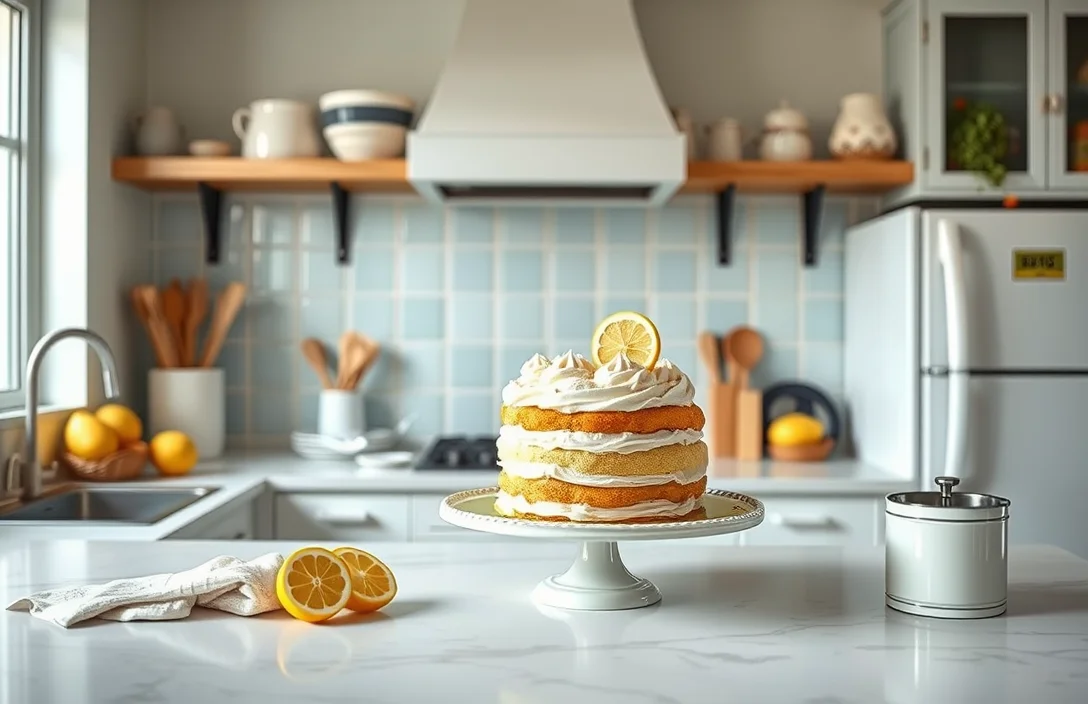
- Use a cake stand for an elegant presentation. This elevates the cake and showcases its beautiful layers.
- Dust the top with powdered sugar using a fine sieve for a delicate, snowy finish.
- Add thin lemon slices or candied lemons on top for a pop of color and additional flavor.
- Serve with a dollop of whipped cream or a scoop of vanilla ice cream for a delightful contrast.
What Pairs Well
Complement the bright flavors of your lemon cake with these delicious pairings:
- Fresh Berries: Strawberries, blueberries, or raspberries add a burst of color and freshness.
- Herbs: A sprig of fresh mint or basil can enhance the citrus notes beautifully.
- Citrus Sauces: A lemon curd or a citrus glaze can intensify the lemon flavor.
- Drinks: Pair with iced tea, lemonade, or a light white wine for a refreshing complement.
Chef’s tip: Serve the lemon cake slightly chilled to enhance its refreshing qualities and let the flavors shine.
| Pairing | Flavor Profile |
|---|---|
| Fresh Berries | Sweet and tart |
| Whipped Cream | Light and creamy |
| Lemon Curd | Rich and tangy |
With these serving suggestions, your lemon cake will not only taste delicious but will also look stunning on the dessert table. Enjoy your baking adventures!
Quick Summary
| Prep Time | 20 minutes |
|---|---|
| Cook Time | 30 minutes |
| Total Time | 50 minutes |
| Servings | 8 |
- Preheat oven: Set to 350°F (175°C) before mixing ingredients.
- Grease pans: Use butter and flour to prevent sticking.
- Mix dry ingredients: Whisk together flour, baking powder, and salt first.
- Add zest and juice: Incorporate fresh lemon zest and juice for flavor.
- Check doneness: Use a toothpick to ensure the cake is fully baked.
- Room temperature ingredients: Ensure eggs and butter are at room temp for better mixing.
- Let it cool: Allow the cake to cool in the pan for 10 minutes before transferring to a rack.
Frequently Asked Questions
Can I make this ahead of time? How to store and reheat?
You can make the lemon cake a day in advance. Store it in an airtight container at room temperature for up to 2 days, or refrigerate for longer freshness; reheat individual slices in the microwave for about 10-15 seconds.
What can I substitute for butter in the lemon cake?
You can use equal parts vegetable oil or coconut oil as a substitute for butter, which will keep the cake moist and tender. If you’re looking for a dairy-free option, opt for a plant-based butter alternative.
How do I know when the lemon cake is done?
The lemon cake is done when a toothpick inserted in the center comes out clean or with just a few moist crumbs attached. It should also spring back lightly when pressed in the center and have a light golden color.
Can I freeze this lemon cake? How long does it last?
Yes, you can freeze the lemon cake for up to 3 months. Wrap it tightly in plastic wrap and aluminum foil to prevent freezer burn, and thaw it overnight in the fridge before serving.
What if I don’t have a bundt pan for the lemon cake?
If you don’t have a bundt pan, you can use a 9×5 inch loaf pan or two 8-inch round cake pans instead, adjusting the baking time as needed. Just keep an eye on the cake as it bakes, checking for doneness a few minutes earlier than the recipe suggests.

- Make Cheesecake Up to 3 Days Ahead: Tips for Best Flavor & Texture - March 4, 2026
- Easy No-Bake Cool Doen Cheesecake: Quick Recipe & Tips - March 4, 2026
- Decadent Dulce de Leche Cheesecake: Easy Step-by-Step Recipe - March 4, 2026