Do Traditional Cheesecakes Need Eggs? Discover Recipes & Tips!
There’s something truly delightful about a rich, creamy cheesecake that melts in your mouth. This dessert is not just a treat; it’s a celebration staple that brings smiles at every gathering, from birthdays to cozy family dinners. The tangy cream cheese, combined with sweet notes, makes it an irresistible comfort food.
In this guide, you’ll discover traditional cheesecake recipes that include eggs and delicious eggless alternatives. Expect prep time of 20 minutes, cook time of 1 hour, and servings for 8 people. These recipes are designed to be straightforward, so you can follow along with ease.
| Prep Time | Cook Time | Total Time | Servings | Difficulty |
|---|---|---|---|---|
| 20 minutes | 1 hour | 1 hour 20 minutes | 8 | Easy |
Cheesecake Origins
Cheesecake is a delightful dessert that has been enjoyed for centuries, with roots dating back to ancient Greece. The inclusion of eggs in the traditional recipe plays a crucial role in creating the creamy texture that many have come to love. Understanding the origin and evolution of cheesecake helps us appreciate its special place in culinary history and its varied forms worldwide.
- Ancient Greece: The earliest known cheesecake was made with fresh cheese, honey, and flour, but eggs were often not included.
- Roman Influence: Romans adopted and adapted the dish, sometimes adding eggs to create a richer consistency.
- Modern Variants: Today, cheesecakes can be made with or without eggs, depending on the desired texture and recipe style.
Pro tip: Adding eggs not only enhances the texture but also helps bind the ingredients together, resulting in a smoother, creamier cheesecake.
Eggs can be a key ingredient in many classic recipes, providing structure and stability. However, with the rise of eggless versions, such as those made with silken tofu or yogurt, there’s a cheesecake for everyone. Here’s a quick reference of egg-based and eggless cheesecake types:
| Cheesecake Type | Contains Eggs? |
|---|---|
| New York Style | Yes |
| Ricotta Cheesecake | Yes |
| No-Bake Cheesecake | No |
| Vegan Cheesecake | No |
Whether you prefer the traditional egg-based cheesecake or an eggless version, each offers a unique taste and texture, making cheesecake a timeless favorite for any occasion.
Essential Ingredients List
This section outlines the essential ingredients for traditional cheesecakes that contain eggs. Understanding these ingredients and their exact measurements is crucial for achieving the perfect creamy texture and flavor balance in your cheesecake.
| Item | Amount/Specification | Notes |
|---|---|---|
| Cream Cheese | 16 ounces (450g) | Softened to room temperature for easy blending |
| Granulated Sugar | 1 cup (200g) | Provides sweetness and helps with texture |
| Large Eggs | 3 | Room temperature for better emulsification |
| Sour Cream | ½ cup (120g) | Adds creaminess and a slight tang |
| Vanilla Extract | 1 teaspoon | Enhances flavor |
| All-Purpose Flour | 2 tablespoons (15g) | Helps stabilize the filling |
| Butter (for crust) | ½ cup (115g) | Melted for mixing with crust ingredients |
| Graham Cracker Crumbs (for crust) | 1 ½ cups (150g) | Provides the base for the cheesecake |
- For eggless variations, you can substitute the eggs with ½ cup of unsweetened applesauce or 1 tablespoon of ground flaxseed mixed with 3 tablespoons of water.
- Ensure all ingredients are at room temperature to create a smooth filling.
- If the cheesecake filling is lumpy, blend it again before pouring it into the crust.
- For a lighter texture, you can beat the eggs separately until frothy before incorporating them into the cream cheese mixture.
Required Kitchen Equipment
When preparing a cheesecake that contains eggs, having the right kitchen equipment is essential for achieving the perfect texture and flavor. Below is a list of the necessary tools, along with preparation steps to ensure a smooth baking process.
- Stand Mixer or Hand Mixer: You’ll need a stand mixer or a hand mixer to beat the cream cheese and sugar until smooth. This step is crucial for eliminating lumps and achieving a creamy texture. If using a hand mixer, make sure to mix on medium speed for about 3-4 minutes until the mixture is fluffy and well combined.
- Mixing Bowls: Prepare at least two mixing bowls: one for the cream cheese mixture and another for the egg mixture. Ensure that the bowls are clean and dry to prevent any unwanted moisture from affecting the batter. A large bowl for the cream cheese should hold at least 8 cups (2 liters).
- Rubber Spatula: A rubber spatula is essential for folding in the eggs gently into the cream cheese mixture. This helps maintain the airiness of the batter. Be gentle when folding to avoid deflating the mixture.
- 9-inch Springform Pan: A springform pan is ideal for cheesecakes as it allows for easy removal once baked. Ensure that the pan is tightly sealed to prevent any water from the water bath seeping in if you choose to bake it that way.
- Baking Sheet: Use a baking sheet to create a water bath for the cheesecake, which helps prevent cracking during baking. Place the springform pan inside a larger baking dish filled with hot water halfway up the sides of the pan.
- Food Processor: If you’re making a crust, a food processor will make quick work of crushing graham crackers or cookies. Pulse until you achieve fine crumbs, about 15-20 seconds.
Prep Time: 15 minutes. Cook Time: 60-70 minutes at 325°F (160°C). Make sure to adjust your oven rack to the center position for even baking.
Step-by-Step Instructions
This section provides a detailed guide for making a classic cheesecake that contains eggs, highlighting their essential role in achieving a creamy texture and stable structure. Follow these steps closely to ensure your cheesecake turns out perfectly every time.
- Prepare the crust: Preheat your oven to 350°F (175°C). In a bowl, combine 1 ½ cups (150g) of graham cracker crumbs, ⅓ cup (40g) of granulated sugar, and ½ cup (113g) of melted unsalted butter. Mix until all the crumbs are moistened. Press the mixture firmly into the bottom of a 9-inch (23cm) springform pan. Bake for 10 minutes until lightly golden, then allow it to cool completely.
- Make the filling: In a large mixing bowl, beat 2 (8 oz or 227g each) packages of cream cheese at room temperature until smooth and creamy, about 2 minutes. Gradually add 1 cup (200g) of granulated sugar and continue mixing until well combined, scraping down the sides of the bowl as needed.
- Add the eggs: Add 3 large eggs, one at a time, mixing on low speed after each addition until just incorporated. This ensures a smooth batter without overmixing, which can lead to cracks. The mixture should look glossy and slightly thick.
- Incorporate flavorings: Add 1 teaspoon of vanilla extract and 1 tablespoon of lemon juice to the filling. Mix on low speed until combined, which will balance the richness of the cream cheese. The batter should have a uniform consistency and a pleasant aroma from the vanilla.
- Bake the cheesecake: Pour the filling into the cooled crust and smooth the top with a spatula. Bake in the preheated oven for 55-60 minutes or until the center is set but slightly jiggly. The edges should look firm and slightly puffed. Do not open the oven door during the first 40 minutes to prevent sinking.
- Cool and chill: Once baked, turn off the oven and leave the cheesecake inside with the door ajar for 1 hour to cool gradually. This helps prevent cracks. Afterward, refrigerate for at least 4 hours or overnight to set completely before serving.
Expert Tips & Mistakes
Understanding the role of eggs in cheesecake is essential for achieving that perfect texture and flavor. Whether you’re a fan of traditional egg-based cheesecakes or looking for eggless variations, knowing the common pitfalls can save you from disappointment.
- Eggs create structure: In traditional cheesecakes, eggs help set the filling, providing that creamy texture. Make sure to use the correct number—typically, you’ll need 3 large eggs for a standard 9-inch cheesecake. Overbeating the eggs can lead to cracks, so mix just until combined.
- Temperature matters: Use room temperature eggs for a smoother batter. Cold eggs can cause lumps. Let them sit out for about 30 minutes before mixing. This will help your cheesecake bake evenly and achieve that desired creamy consistency.
- Watch your mixing: When incorporating eggs, mix them into the cream cheese mixture on low speed. This prevents too much air from getting in, which can lead to a puffed-up cheesecake that collapses upon cooling.
- Don’t skip the water bath: Using a water bath during baking helps regulate the temperature and adds moisture, preventing cracks. Wrap the bottom of your springform pan in aluminum foil to prevent leaks, and place it in a larger pan filled with hot water.
- Overbaking is a no-no: Bake at 325°F (160°C) and start checking for doneness around 50 minutes. The center should be slightly jiggly but not liquid. It will continue to firm up as it cools, so don’t be tempted to bake it until completely set.
Variations & Substitutions
This section delves into how you can modify traditional cheesecake recipes that contain eggs, offering variations that cater to different dietary needs and preferences. Understanding these substitutions can help you create delicious cheesecakes, whether you’re looking for gluten-free, vegan, or simply egg-free options.
Egg-Based Cheesecake Variations
- Classic New York Cheesecake: Typically includes 4 large eggs, which provide structure and a creamy texture.
- Chocolate Cheesecake: Uses 3 large eggs alongside 8 ounces of melted chocolate for richness.
- Fruit Swirl Cheesecake: Incorporates 3 large eggs with 1 cup of pureed fruit for a tart flavor.
Egg Substitutions for Cheesecakes
If you’re looking for eggless alternatives, here are some effective substitutes:
| Egg Substitute | Amount | Best Used In |
|---|---|---|
| Unsweetened Applesauce | ¼ cup | Most cheesecakes |
| Silken Tofu | ¼ cup (blended) | Rich, creamy cheesecakes |
| Flaxseed Meal | 1 tablespoon mixed with 2.5 tablespoons water | Dense cheesecakes |
Chef’s tip: Allow your egg-free cheesecake to set in the fridge for at least 4 hours, or overnight for best results.
For those with gluten sensitivities, swap out traditional graham cracker crusts for gluten-free options made from almond flour or gluten-free cookies. This way, you can enjoy your cheesecake without compromising on flavor or texture.
Serving & Plating Ideas
Serving a cheesecake that contains eggs can elevate your dessert experience, allowing for a rich flavor and creamy texture. Here are some creative ways to present and enjoy your cheesecake, ensuring it looks as good as it tastes.
- Classic Slice with Fresh Berries: Serve a slice of your cheesecake topped with a handful of fresh berries like raspberries or strawberries. The tartness of the berries contrasts beautifully with the creamy sweetness of the cheesecake.
- Chocolate Drizzle: For a decadent touch, drizzle melted chocolate over the cheesecake before serving. This adds a rich layer of flavor and a visually appealing touch. Use about ½ cup of semi-sweet chocolate chips melted in the microwave for 30-second intervals, stirring until smooth.
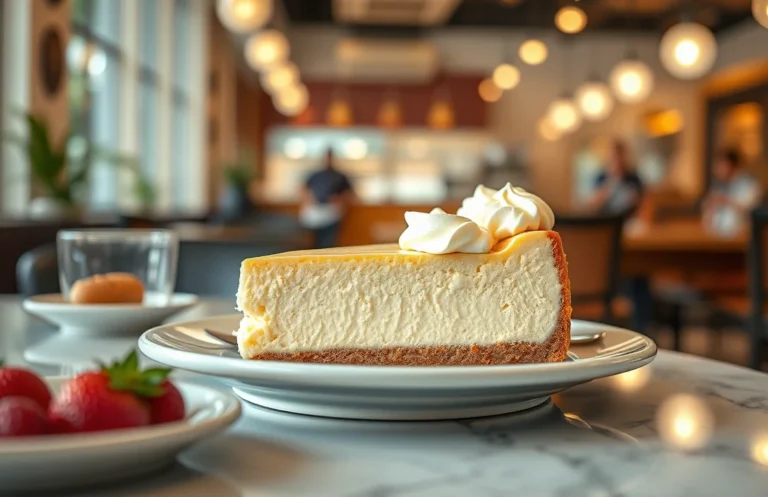
- Whipped Cream Clouds: A dollop of freshly whipped cream on top of your cheesecake adds a light and airy element. Whip 1 cup of heavy cream with 2 tablespoons of powdered sugar until soft peaks form, then gently spoon it on top before serving.
- Citrus Zest Garnish: Finely grate some lemon or orange zest over the cheesecake for a burst of freshness. This not only adds color but also enhances the overall flavor profile, making each bite even more delightful.
- Layered Dessert Cups: For a fun presentation, crumble leftover cheesecake and layer it in individual cups with whipped cream and fruit. This makes for an elegant dessert that’s easy to serve at gatherings.
Chef’s tip: Always chill your cheesecake for at least 4 hours before serving to ensure it sets properly and slices beautifully.
Quick Summary
| Prep Time | Cook Time | Total Time | Servings |
|---|---|---|---|
| 15 minutes | 1 hour | 1 hour 15 minutes | 8 servings |
- Preheat oven to 325°F (163°C) for even baking.
- Whisk eggs until frothy before adding to the cream cheese mixture for a light texture.
- Bake in a water bath to prevent cracking and promote even cooking.
- Let cool completely before refrigerating to set properly.
- Chill for at least 4 hours or overnight for best flavor and texture.
- Tip: Use room temperature ingredients for a smoother batter.
- Tip: Avoid overmixing to prevent air bubbles that can cause cracks.
Frequently Asked Questions
Can I make this cheesecake ahead of time? How to store and reheat?
You can absolutely make this cheesecake up to 2 days in advance. Store it in the refrigerator, covered tightly with plastic wrap, and serve it chilled without reheating for the best texture.
What can I substitute for eggs in this cheesecake?
You can use 1/4 cup of unsweetened applesauce or 1/4 cup of silken tofu blended until smooth as a substitute for each egg. However, this may slightly alter the texture and richness of your cheesecake.
How do I know when my cheesecake is done?
Your cheesecake is done when the edges are set and the center still jiggles slightly, which should take about 50-60 minutes at 325°F (163°C). It will continue to firm up as it cools, so don’t overbake!
Can I freeze this cheesecake? How long does it last?
You can freeze the cheesecake for up to 3 months; just wrap it tightly in plastic wrap and then in aluminum foil to prevent freezer burn. Thaw it overnight in the refrigerator before serving for the best texture.
Why did my cheesecake turn out cracked on top?
Your cheesecake may crack if it was baked at too high a temperature or if it was overbaked; baking at a low temperature of 325°F (163°C) helps prevent this. To fix it, you can cover the cracks with a fruit topping or whipped cream after it cools!

- Decadent Peanut Butter No-Bake Cheesecake: Easy Recipe to Indulge - April 3, 2026
- Delicious Mango No-Bake Cheesecake: Step-by-Step Recipe - April 3, 2026
- Decadent Raspberry No-Bake Cheesecake: Easy Step-by-Step Recipe - April 3, 2026