
Perfect Cheesecake: Key Signs It’s Done and Ready to Chill
Cheesecake is truly one of those desserts that can make any occasion feel special. Rich, creamy, and with a buttery crust, it’s the perfect combination of indulgence and comfort. Whether you’re celebrating a birthday or simply treating yourself on a weeknight, a perfectly baked cheesecake is bound to impress and satisfy your sweet cravings.
To ensure your cheesecake is just right, you’ll learn how to identify visual cues, texture checks, and the recommended internal temperature for success. This guide will take you through each step to guarantee a delicious result every time.
| Prep Time | Cook Time | Total Time | Servings | Difficulty |
|---|---|---|---|---|
| 20 minutes | 60 minutes | 1 hour 20 minutes | 8 servings | Medium |
History of Cheesecake
Understanding the history of cheesecake enriches our appreciation of this beloved dessert and its evolution through time. Knowing its origins and cultural significance can also inform our approaches to perfecting the baking process, especially when determining when a cheesecake is done.
- Origin Story: Cheesecake dates back to ancient Greece, where it was served to athletes during the first Olympic Games in 776 B.C. The Romans later adapted the recipe, incorporating ingredients like eggs and honey, which laid the groundwork for various styles we enjoy today.
- Cultural Importance: Cheesecake has made its mark across different cultures, evolving into numerous regional varieties, such as the rich New York-style cheesecake and the lighter Italian ricotta cheesecake. Each version carries its own baking traditions and methods, influencing how we determine doneness.
- When to Serve: Traditionally, cheesecake is served at celebrations, from birthdays to holidays, making it essential to master the baking process. Knowing how to tell when it’s done ensures that your cheesecake is not only safe to eat but also has the perfect texture and flavor that delights guests.
Ingredients for Cheesecake
Understanding the right ingredients is essential for baking a perfect cheesecake that showcases the desired texture and flavor. The quality and type of ingredients you choose can significantly affect the final outcome, including how you determine if your cheesecake is done. Below is a detailed list of the key ingredients you’ll need.
| Item | Amount/Specification | Notes |
|---|---|---|
| Cream Cheese | 16 ounces (450g) | Use full-fat cream cheese for a rich texture. |
| Sugar (Granulated) | 1 cup (200g) | Adjust to taste; use superfine sugar for smoother texture. |
| Sugar (Brown) | ½ cup (100g) | Add for depth of flavor; light or dark brown works. |
| Large Eggs | 3 | Ensure they are at room temperature for even mixing. |
| Vanilla Extract | 1 teaspoon | Use pure vanilla for the best flavor. |
- For the best results, allow the cream cheese to come to room temperature before mixing to avoid lumps.
- When checking for doneness, look for slight jiggle in the center of the cheesecake; it should not be completely firm.
- If the cheesecake cracks, it may be due to overbaking; keep an eye on it during the last few minutes of baking.
Essential Kitchen Tools
Understanding how to tell when your cheesecake is perfectly baked is essential to achieving that creamy, smooth texture we all love. The right kitchen tools not only help in the baking process but also ensure you can accurately assess doneness. Here’s a breakdown of the essential equipment you’ll need.
| Item | Amount/Specification | Notes |
|---|---|---|
| Springform Pan | 9-inch (23 cm) | Allows for easy removal of the cheesecake without cracking it. |
| Stand or Hand Mixer | – | Ensures smooth mixing of ingredients, preventing lumps. |
| Oven Thermometer | – | Checks that your oven is at the correct temperature of 325°F (163°C). |
- Always use a springform pan: It makes it easier to release the cheesecake without damaging it.
- Monitor your oven temperature: An oven thermometer will help you avoid undercooked or overcooked cheesecake.
- Check your mixer settings: Use low speed to combine ingredients and high speed for whipping eggs to achieve the right texture.
Baking Process Steps
Determining when your cheesecake is done is crucial for achieving that perfect creamy texture. In this section, we will detail the steps involved in baking your cheesecake, including essential timing and visual cues to look for.
- Prepping Ingredients: Before you start, ensure all your ingredients are at room temperature. This includes 16 ounces (450g) of cream cheese, ½ cup (100g) of granulated sugar, 2 large eggs, and 1 teaspoon of vanilla extract. Room temperature ingredients blend more smoothly, creating a creamier batter.
- Mixing the Batter: In a large mixing bowl, beat the cream cheese with an electric mixer on medium speed for about 2 minutes, until smooth and creamy. Gradually add the sugar, mixing until fully incorporated. The mixture should be free of lumps and have a glossy appearance.
- Baking Time: Preheat your oven to 325°F (160°C). Pour the cheesecake batter into a prepared springform pan. Bake for 50-60 minutes. The edges should look set, while the center should still have a slight wobble. This wobble indicates the cheesecake will firm up as it cools.
- Texture Check: After the baking time, turn off the oven but leave the cheesecake inside for an additional hour. The gradual cooling helps prevent cracks. When you remove it, the top should look slightly puffed and the center should not jiggle excessively.
- Temperature Recommendations: For best results, use an instant-read thermometer; the internal temperature should reach around 150°F (65°C) when done. If it’s undercooked, return it to the oven for 5-10 more minutes, checking frequently.
Visual Cues for Doneness
Knowing when your cheesecake is done can be tricky, but certain visual cues will guide you. These indicators will help you achieve that perfect creamy texture without overbaking, ensuring your cheesecake turns out deliciously silky and smooth.
Color Changes
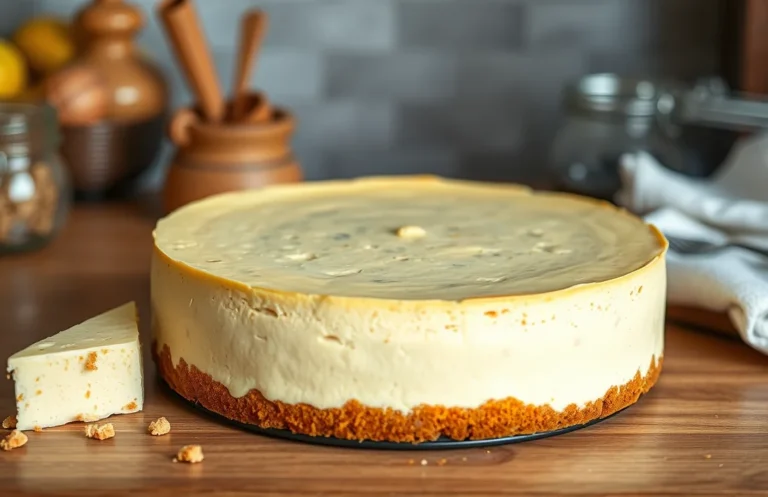
As your cheesecake bakes, pay attention to its color. A perfectly baked cheesecake should have a light golden hue around the edges. The center should be slightly paler than the edges, indicating that it’s still creamy. Here’s what to look for:
- Edges: Light golden brown.
- Center: Slightly lighter than the edges, but not completely pale.
Surface Cracks
While a few cracks might be unavoidable, they can tell you a lot about doneness. If your cheesecake has minimal cracks on the surface, it’s likely done. Here are some tips:
- Minimal Cracks: A few small cracks are fine; it indicates your cheesecake is set.
- Excessive Cracks: If cracks are deep and numerous, it may be overbaked. Next time, consider lowering the temperature by 25°F (about 15°C).
Jiggle Test
The jiggle test is a classic method to check for doneness. Gently shake the pan; the center should still have a slight jiggle, but the edges should be firm. Here’s how to perform it:
- With the oven door closed, gently shake the cheesecake.
- If the center jiggles slightly but the edges are set, it’s done.
- If the center wobbles excessively, it needs more time.
Chef’s tip: If you’re unsure, it’s better to underbake slightly, as the cheesecake will continue to cook as it cools.
Texture Check Techniques
Knowing how to assess the texture of your cheesecake is essential for achieving that perfect creamy consistency. By understanding the signs of doneness through tactile and visual cues, you can ensure your cheesecake comes out just right every time.
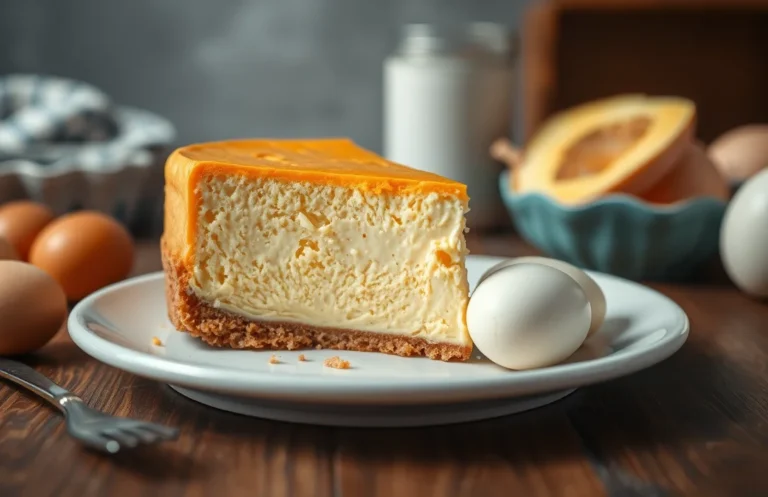
- Center Firmness: Gently shake the cheesecake while it’s still in the oven. The center should have a slight jiggle but not look liquidy. If the edges are set and the center wobbles just a bit, that’s a good indicator that your cheesecake is ready to come out. Aim for a consistency that feels like a firm pudding.
- Cooling Effect: After removing the cheesecake from the oven, allow it to cool in the pan for about 1 hour. The residual heat will continue to firm up the center. You should notice a slight difference in texture as it cools; it should feel less jiggly and more cohesive. This step is crucial to prevent cracks from forming.
- Refrigeration Impact: Once cooled, refrigerate the cheesecake for at least 4 hours, or overnight if possible. This chilling period allows the flavors to deepen and the texture to solidify further. When you cut into it, the cheesecake should hold its shape without crumbling, and the texture should be velvety smooth.
Recommended Temperature Range
Knowing the ideal internal temperature for your cheesecake is crucial for achieving the perfect texture and flavor. A properly baked cheesecake should be set around the edges and slightly jiggly in the center, but the best way to ensure it’s done is by using a thermometer.
Using a Thermometer
To check the doneness of your cheesecake, insert an instant-read thermometer into the center of the cheesecake, avoiding the crust. You’re aiming for a specific temperature:
- Ideal internal temperature: 150°F to 160°F (65°C to 71°C)
- At 150°F, the cheesecake will still have a slight jiggle in the center, which is perfect for cooling and setting later.
- At 160°F, it will be firmer but still creamy and delicious.
Safe Temperature Guidelines
While cheesecake can safely be enjoyed at a range of temperatures, keeping it within the following guidelines ensures both safety and flavor:
| Temperature Range | Texture | Notes |
|---|---|---|
| Below 150°F (65°C) | Too soft, may not set properly | Risk of a runny texture |
| 150°F – 160°F (65°C – 71°C) | Perfectly set, creamy | Ideal for serving |
| Above 160°F (71°C) | Dense, may crack | Overbaking can lead to dryness |
Chef’s tip: Always allow your cheesecake to cool gradually in the oven with the door ajar for about an hour after baking. This helps prevent cracking and ensures a smooth texture.
Troubleshooting Baking Issues
Knowing how to identify when your cheesecake is done is crucial for achieving that perfect creamy texture. This section covers common problems associated with baking cheesecake, including signs of overbaking and undercooking, as well as solutions for texture issues.
Overbaking Signs
Symptom: The cheesecake top is cracked and the edges are puffed up while the center is too firm.
Cause: Overbaking causes the proteins in the cheesecake to tighten excessively, leading to cracks and a dry texture.
Fix: To prevent overbaking, remove your cheesecake from the oven when the center is slightly jiggly (it will set as it cools). Aim for a temperature of 150°F (65°C) in the center for a perfectly baked cheesecake.
Undercooking Symptoms
Symptom: The cheesecake appears too wobbly in the center and may not hold its shape when sliced.
Cause: Undercooking prevents the cheesecake from setting properly, resulting in a runny texture.
Fix: If your cheesecake is undercooked, return it to the oven for 5-10 more minutes, checking regularly. The center should firm up without overbaking.
Fixing Texture Issues
Symptom: The cheesecake is grainy or has a curdled texture.
Cause: This can happen if the cream cheese was not at room temperature or was overmixed.
Fix: Always ensure your cream cheese is softened to room temperature (about 70°F/21°C) before mixing. Mix just until combined to avoid incorporating too much air, which can lead to cracks.
Quick Summary
| Prep Time | 20 minutes |
|---|---|
| Cook Time | 60 minutes |
| Total Time | 1 hour 20 minutes |
| Servings | 8 |
- Check the center: It should jiggle slightly but not be liquid.
- Temperature test: Use an instant-read thermometer; it should read 150°F (65°C).
- Cooling time: Let it cool in the oven for 1 hour after baking.
- Crack check: Look for small cracks on the surface as a sign of doneness.
- Chill prior to serving: Refrigerate for at least 4 hours for best texture.
- Tip: Avoid overmixing to prevent air bubbles.
- Tip: Use a water bath for even cooking and a creamy texture.
Frequently Asked Questions
Can I make this ahead of time? How to store and reheat?
You can absolutely make cheesecake ahead of time! Store it in the refrigerator, covered tightly with plastic wrap, for up to 5 days; just serve it cold or let it sit at room temperature for about 30 minutes before serving.
What can I substitute for cream cheese?
If you need a substitute for cream cheese, you can use mascarpone cheese or a blend of cottage cheese and sour cream, but the flavor and texture might vary slightly.
How do I know when it’s done?
Your cheesecake is done when the edges are set, but the center still has a slight jiggle; it should look firm but not overly dry or cracked, usually around 150°F (65°C) if you check with a thermometer.
Can I freeze this? How long does it last?
You can freeze cheesecake for up to 3 months if tightly wrapped in plastic wrap and then aluminum foil. Just thaw it in the refrigerator overnight and enjoy!
Why did my cheesecake crack on top?
Your cheesecake may crack due to overbaking or baking at too high a temperature; aim for a gentle bake at around 325°F (160°C) and avoid opening the oven door too often.

- Decadent Peanut Butter No-Bake Cheesecake: Easy Recipe to Indulge - April 3, 2026
- Delicious Mango No-Bake Cheesecake: Step-by-Step Recipe - April 3, 2026
- Decadent Raspberry No-Bake Cheesecake: Easy Step-by-Step Recipe - April 3, 2026