Cheesecake Slice Calories: Tips for Lower-Calorie Versions
Cheesecake is one of those desserts that can turn any gathering into a celebration. Its creamy texture and rich flavor make it irresistible, whether it’s for a birthday, holiday, or simply a cozy weeknight treat. Just one slice can make your taste buds dance, leaving you craving more!
In this guide, you’ll learn about calorie counts for at least five cheesecake variations, along with a low-calorie recipe that doesn’t skimp on flavor. Expect clear instructions, precise measurements, and cooking tips to ensure your cheesecake turns out perfect each time.
| Prep Time | Cook Time | Total Time | Servings | Difficulty |
|---|---|---|---|---|
| 15 minutes | 60 minutes | 75 minutes | 8 slices | Medium |
Cheesecake Origins and Significance
Understanding the origins and significance of cheesecake enriches our appreciation for this beloved dessert. From ancient Greece to modern variations across cultures, cheesecake has evolved into numerous forms, each with its unique flavors and calorie profiles.
Historical Background
Cheesecake’s history can be traced back to ancient Greece, where it was made with simple ingredients like cheese, flour, and honey. It was served to athletes during the first Olympic games around 776 B.C. The Romans later adopted the recipe, modifying it with new ingredients and techniques. By the Middle Ages, cheesecake recipes began appearing across Europe, each region adding its own twist.
Cultural Variations
Cheesecake has taken on many forms worldwide, leading to variations in calorie counts depending on ingredients and preparation methods. Here are a few notable examples:
- New York Style: Rich and dense, typically made with cream cheese. A slice can contain around 400-600 calories.
- Italian Ricotta Cheesecake: Lighter and often made with ricotta cheese, averaging 300-400 calories per slice.
- Japanese Cotton Cheesecake: Fluffy and airy, usually lower in calories, around 200-300 per slice.
- No-Bake Cheesecake: Often uses whipped cream, which can lead to a calorie range of 350-500 per slice.
Chef’s tip: Opt for lighter cream cheese or Greek yogurt in your cheesecake for a deliciously lower-calorie treat without sacrificing flavor!
| Cheesecake Type | Calories per Slice |
|---|---|
| New York Style | 400-600 |
| Italian Ricotta | 300-400 |
| Japanese Cotton | 200-300 |
| No-Bake | 350-500 |
As cheesecake continues to evolve, understanding its origins and cultural significance helps us appreciate the various calorie counts that come with each delicious slice.
Ingredients for Cheesecake
Understanding the ingredients in your cheesecake not only contributes to its deliciousness but also helps you gauge the calorie count for each slice. By selecting specific ingredients and adjusting quantities, you can enjoy your cheesecake while being mindful of its calorie content.
| Item | Amount/Specification | Notes |
|---|---|---|
| Cream Cheese | 16 oz (450g) | Full-fat for richer flavor; lower-fat options available. |
| Sugar | 1 cup (200g) | Granulated sugar; can substitute with erythritol for lower calories. |
| Butter (for crust) | ½ cup (113g) | Melted; can use coconut oil for a dairy-free option. |
| Graham Cracker Crumbs | 1 ½ cups (150g) | For a traditional crust; consider almond flour for a gluten-free option. |
| Eggs | 3 large | Room temperature for better mixing. |
| Sour Cream | ½ cup (120g) | For creaminess; use Greek yogurt for fewer calories. |
- For a lighter cheesecake, consider using reduced-fat cream cheese and yogurt instead of sour cream.
- Watch the sugar quantity; reducing it by ¼ cup won’t greatly affect the taste but can lower calories.
- Ensure your cream cheese is at room temperature before mixing to avoid lumps and achieve a smooth texture.
Necessary Kitchen Tools
To create a delicious cheesecake that is both creamy and rich, having the right kitchen tools is essential. Each tool plays a significant role in ensuring that your cheesecake turns out perfectly, especially when considering the calorie content of each slice. Let’s go over what you’ll need to make this delightful dessert.
| Item | Amount/Specification | Notes |
|---|---|---|
| Mixing Bowls | 2 large, 1 medium | Glass or stainless steel works best for easy mixing and cleanup. |
| Springform Pan | 9-inch (23 cm) | This allows for easy removal of the cheesecake without breaking it. |
| Electric Mixer | Hand or stand mixer | Use on medium speed to achieve a smooth, creamy texture for your filling. |
- Tip: Ensure your cream cheese is at room temperature before mixing to avoid lumps.
- Tip: Use a rubber spatula to scrape down the sides of the mixing bowl to ensure all ingredients are well incorporated.
- Tip: If you don’t have a springform pan, a regular pie dish can work, but be careful when serving.
Step-by-Step Cheesecake Instructions
Creating a delicious cheesecake requires careful attention to detail, especially when it comes to the crust and filling. Each step plays a crucial role in achieving that perfect slice and understanding the calorie content of your creation. Here’s how to prepare your cheesecake step-by-step.
Preparing the Crust
- Preheat your oven to 350°F (175°C). This ensures your cheesecake bakes evenly. In a mixing bowl, combine 1 ½ cups (150g) of graham cracker crumbs, ½ cup (100g) of granulated sugar, and ½ cup (115g) of melted unsalted butter. Stir until the mixture resembles wet sand.
- Press the crumb mixture firmly into the bottom of a 9-inch (23cm) springform pan. Use the bottom of a measuring cup to create an even layer. Bake for 10 minutes until lightly golden and fragrant, then remove from the oven and let it cool.
Mixing the Filling
- In a large mixing bowl, beat 4 (8 oz) packages of softened cream cheese (room temperature) with an electric mixer on medium speed until smooth and creamy, about 2-3 minutes. This step is vital to prevent lumps in your filling.
- Add 1 cup (200g) of granulated sugar, 1 teaspoon of vanilla extract, and 4 large eggs, one at a time. Beat on low speed until just combined; overmixing can incorporate too much air, leading to cracks during baking.
Baking Process
- Pour the cream cheese mixture over the cooled crust and smooth the top with a spatula. Place the springform pan in a larger baking dish filled with hot water, creating a water bath that helps prevent cracking.
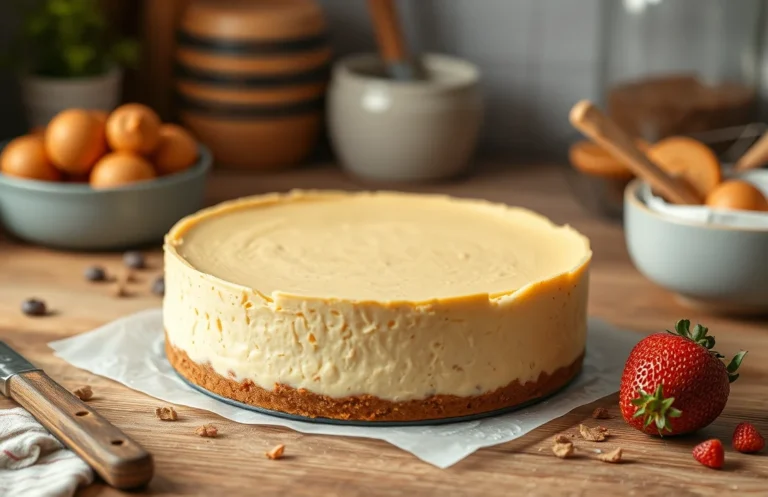
- Bake for 50-60 minutes until the edges are set but the center still jiggles slightly when you shake the pan. Turn off the oven and crack the door, allowing the cheesecake to cool gradually for 1 hour; this helps minimize cracking.
Once cooled, refrigerate for at least 4 hours or overnight to firm up. Remember, cheesecake calories can vary based on ingredients; using low-fat cream cheese or sugar substitutes can help reduce the calorie count per slice. Enjoy your rich and creamy cheesecake guilt-free!
Pro Tips for Perfect Cheesecake
Creating a perfect cheesecake is not just about following the recipe; it also involves understanding the little things that can make a big difference in texture and flavor. This section will guide you on avoiding cracks and cooling your cheesecake properly, which is crucial for both taste and presentation, and can also impact the calorie count per slice.
Avoiding Cracks
- Use room temperature ingredients: Make sure your cream cheese, eggs, and sour cream are at room temperature before mixing. This helps create a smooth batter and prevents the cheesecake from rising too quickly in the oven, which can lead to cracks.
- Don’t overmix: When incorporating the eggs, mix just until combined. Overmixing can incorporate too much air, causing the cheesecake to puff up and crack while baking.
- Water bath method: Bake your cheesecake in a water bath (bain-marie) by placing the filled springform pan inside another pan with hot water. This gentle, moist heat helps maintain even temperature, reducing the risk of cracking.
- Cool gradually: After baking, turn off the oven and crack the door open slightly. Let the cheesecake cool in the oven for about 1 hour. This gradual cooling helps prevent sudden temperature changes that can cause cracks.
- Chill properly: Once at room temperature, refrigerate your cheesecake for at least 4 hours, preferably overnight. This allows the flavors to meld and the texture to set, making it easier to slice and reducing the calorie content per slice by preventing excess air from causing potential puffiness.
- Use a sharp knife: When slicing, dip your knife in hot water and wipe it dry before each cut. This ensures clean edges and a beautiful presentation, keeping all the yummy flavors intact.
Cheesecake Variations and Substitutions
Exploring variations and substitutions for cheesecake is crucial for accommodating different dietary needs while still enjoying a delicious slice. Whether you’re looking to create a vegan version or need gluten-free options, these alternatives can significantly affect the calorie count of each slice.
Vegan Cheesecake
Vegan cheesecakes can be a delightful alternative that often lowers the calorie content by replacing cream cheese and eggs with plant-based ingredients. Here’s a simple recipe to try:
- 1 ½ cups soaked cashews (225g)
- ½ cup coconut cream (120ml)
- ⅓ cup maple syrup (80ml)
- 1 tablespoon lemon juice (15ml)
- 1 teaspoon vanilla extract (5ml)
Blend the soaked cashews, coconut cream, maple syrup, lemon juice, and vanilla until smooth. Pour into a crust made from crushed nuts and dates, and refrigerate for at least 4 hours to set. This vegan cheesecake roughly contains 180 calories per slice (1/12 of the pie).
Gluten-Free Options
If you need a gluten-free cheesecake, simply substitute traditional graham crackers with a gluten-free alternative, such as almond flour or gluten-free cookies. Here’s how to make a gluten-free crust:
- 1 ½ cups almond flour (150g)
- ¼ cup melted coconut oil (60ml)
- 2 tablespoons maple syrup (30ml)
Mix these ingredients together, press into the bottom of your pan, and bake at 350°F (175°C) for 10 minutes until golden. This gluten-free cheesecake typically contains about 250 calories per slice (1/12 of the pie), depending on your filling.
Chef’s tip: Always check labels to ensure all ingredients are certified gluten-free, especially for pre-made products.
Serving and Pairing Ideas
When serving cheesecake, presentation and pairing can elevate the experience while keeping calorie counts in check. Choosing the right garnishes and beverages not only enhances the flavor but also complements the richness of the cheesecake without overwhelming it.
- Garnish with Fresh Fruit: Top each slice with a handful of fresh berries, such as strawberries, blueberries, or raspberries. These fruits are low in calories—approximately 50 calories per cup—and their natural acidity balances the creamy cheesecake. Arrange the berries neatly on top and drizzle with a touch of honey if you desire extra sweetness.
- Add a Dollop of Whipped Cream: A light dollop of whipped cream can add a luxurious touch. Use approximately 2 tablespoons of light whipped cream, which adds about 25 calories. For a lower-calorie option, consider making whipped coconut cream from chilled coconut milk, which has a similar texture with fewer calories.
- Drizzle with Fruit Sauce: Create a simple fruit sauce by simmering 1 cup of your favorite berries with 2 tablespoons of sugar and a splash of water until thickened. This sauce can add about 40 calories per tablespoon, enhancing the flavor while keeping portions in check.
- Pair with the Right Beverage: A well-chosen beverage can complement your cheesecake beautifully. Consider serving it with a cup of herbal tea or a light-bodied dessert wine, such as Moscato or Riesling, which typically has around 120 calories per 5-ounce glass. Opt for unsweetened iced tea for a refreshing non-caloric option.
Cheesecake Calorie Counts
Understanding the calorie content of different cheesecake varieties can help you make informed choices when indulging in this rich dessert. This section breaks down the calorie counts for classic cheesecake and popular fruit-topped variations.
| Cheesecake Type | Calories per Slice (1/8 of a 9-inch cake) |
|---|---|
| Classic Cheesecake | 250-350 calories |
| New York Style Cheesecake | 300-400 calories |
| Chocolate Cheesecake | 350-450 calories |
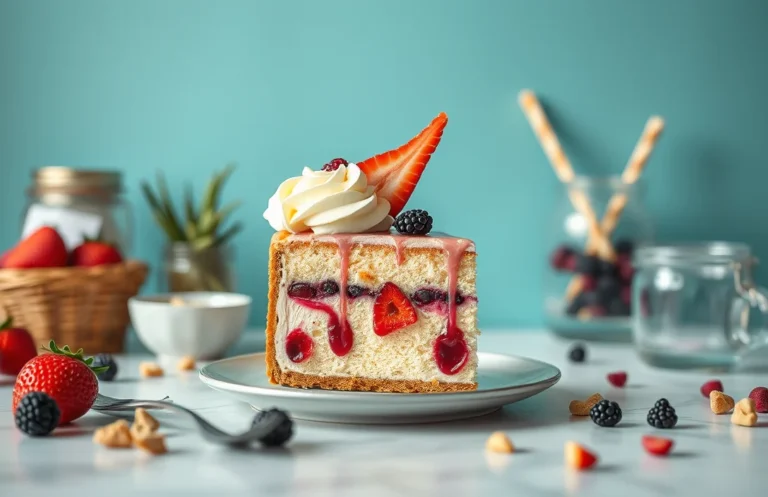
| Fruit-Topped Cheesecake (e.g., Strawberry) | 200-300 calories |
| Low-Calorie Cheesecake (using Greek yogurt) | 150-200 calories |
To make a lower-calorie version of cheesecake, consider using alternatives like low-fat cream cheese, Greek yogurt, or even a crust made from crushed nuts mixed with a small amount of coconut oil instead of traditional graham crackers. It’s crucial to balance flavor and texture while reducing calories, so taste as you go and adjust as needed.
Chef’s tip: Always refrigerate your cheesecake for at least 4 hours before serving to ensure it sets properly and enhances flavor.
Quick Summary
| Prep Time | 20 minutes |
|---|---|
| Cook Time | 1 hour |
| Total Time | 1 hour 20 minutes |
| Servings | 8 |
- Preheat oven to 325°F (163°C) for even baking.
- Mix crust ingredients thoroughly for a firm base.
- Beat cream cheese until smooth to avoid lumps.
- Bake for 60 minutes, until the center is just set.
- Cool slowly in the oven to prevent cracks.
- Chill in the fridge for at least 4 hours before serving.
- Tip: Use a water bath to keep the cheesecake moist.
- Tip: Room temperature ingredients blend better.
- Tip: Avoid overmixing to maintain a light texture.
Frequently Asked Questions
Can I make this ahead of time? How to store and reheat?
You can definitely make cheesecake ahead of time! Store it in the refrigerator, tightly wrapped in plastic wrap, and it will stay fresh for up to 5 days.
What can I substitute for cream cheese?
If you’re looking for a substitute, you can use mascarpone cheese or a vegan cream cheese alternative for a similar texture and flavor in your cheesecake.
How do I know when it’s done?
Your cheesecake is done when the edges are set but the center still has a slight jiggle, which typically takes about 50-60 minutes at 325°F (163°C).
Can I freeze this? How long does it last?
Yes, you can freeze cheesecake; it keeps well for up to 3 months. Wrap it tightly in plastic wrap and then in aluminum foil to prevent freezer burn.
What if I don’t have a springform pan?
If you don’t have a springform pan, you can use a regular round cake pan; just be sure to line the bottom with parchment paper for easy removal after baking.

- 10 Best Air Fryer Oven With Digital Controls 2026 (Reviewed) - October 22, 2026
- 10 Best Air Fryer Oven For Large Families 2026 (Reviewed) - October 22, 2026
- 10 Best Air Fryer Oven For Countertops 2026 (Reviewed) - October 22, 2026