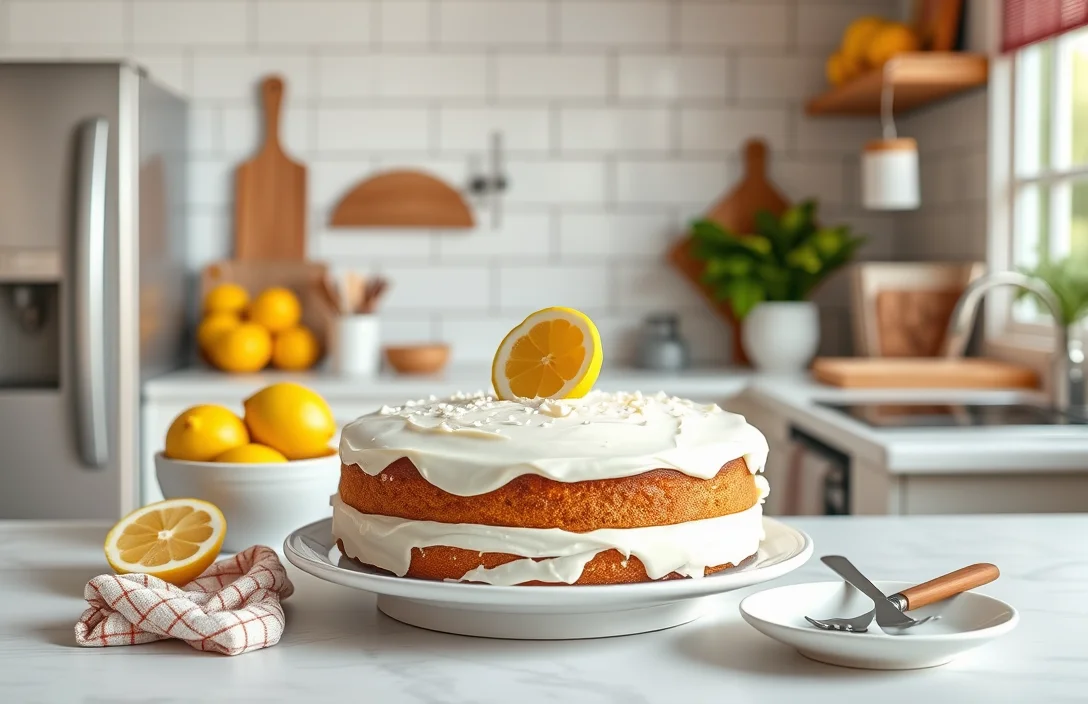
Perfect Lemon Cake Recipe: Light, Moist, and Easy to Make
There’s something truly delightful about a homemade lemon cake—its bright, tangy flavor dances on your palate, leaving you craving another slice. Perfect for any occasion, this cake is light yet moist, making it a fantastic dessert for family dinners, birthday parties, or even a simple weeknight treat. Trust me, it’s a crowd-pleaser!
This lemon cake recipe requires only 15 minutes of prep, 30 minutes of baking, and serves 8 people. With a moderate difficulty level, it’s designed for home cooks looking for clear, step-by-step instructions that guarantee success every time. You’ll find tips for troubleshooting and variations to keep things exciting.
| Prep Time | Cook Time | Total Time | Servings | Difficulty |
|---|---|---|---|---|
| 15 minutes | 30 minutes | 45 minutes | 8 | Moderate |
Lemon Cake Story
Lemon cake has a rich history, often associated with celebrations and gatherings. Its bright flavor and sunny color make it a perfect dessert for spring and summer events, but it’s equally delightful year-round.
- Origin: Lemon cake recipes date back to the 19th century, particularly in American and British baking traditions. The tartness of lemons was used to balance the sweetness of cakes, creating a harmonious flavor profile.
- Significance: This cake symbolizes freshness and zest, often served at birthdays, weddings, and tea parties. The light, airy texture paired with a tangy glaze or frosting elevates any occasion.
- Versatility: Lemon cake can be dressed up with various toppings, such as a simple lemon glaze or a rich buttercream. It can also be enjoyed as a layered cake, adding elegance to your dessert table.
- Seasonal Appeal: While delightful in spring and summer, this cake is also a comforting treat in the colder months. Its bright flavor can lift spirits during dreary days, making it a year-round favorite.
- Perfect Pairings: Lemon cake pairs wonderfully with fresh berries, whipped cream, or even a scoop of vanilla ice cream, enhancing its flavor and presentation.
Chef’s tip: For an extra burst of lemon flavor, add lemon zest to the batter!
Ingredients List
In this section, you’ll find a detailed list of ingredients necessary for crafting the perfect lemon cake. Each component plays a vital role in achieving that delightful balance of sweetness and tartness, as well as a moist texture. Let’s get started!
| Item | Amount/Specification | Notes |
|---|---|---|
| All-purpose flour | 2 ½ cups (315g) | Sifted for lighter texture |
| Granulated sugar | 1 ¾ cups (350g) | Adjust sweetness to taste |
| Baking powder | 1 tablespoon (12g) | Ensure it’s fresh for best rise |
| Salt | ½ teaspoon (3g) | Enhances flavors |
| Unsalted butter | 1 cup (227g) | Softened at room temperature |
| Large eggs | 4 | Bring to room temperature |
| Lemon zest | 2 tablespoons | Freshly grated for flavor |
| Lemon juice | ½ cup (120ml) | Freshly squeezed preferred |
| Vanilla extract | 1 teaspoon (5ml) | Pure extract recommended |
| Milk | ½ cup (120ml) | Whole milk for richness |
- Substitutions: For a dairy-free option, replace butter with coconut oil and milk with almond or oat milk.
- Tip: Use fresh lemons for zest and juice to achieve the best flavor profile.
- Common Mistake: Don’t overmix the batter; stop once the ingredients are just combined to keep the cake light.
Equipment and Prep
Before whipping up your best lemon cake, it’s crucial to gather the right equipment and prepare your workspace. Having everything at your fingertips will ensure a smooth baking experience and help you achieve that light, fluffy texture along with a vibrant flavor.
- Gather Your Equipment: You will need the following tools: a 9-inch round cake pan, mixing bowls (one large and one medium), a whisk, a rubber spatula, a measuring cup, measuring spoons, and a fine-mesh sieve. Make sure your cake pan is greased and lined with parchment paper for easy removal.
- Preheat the Oven: Set your oven to 350°F (175°C) and allow it to preheat fully. This step is essential; a properly heated oven helps the cake rise evenly and develop a beautiful golden color.
- Prepare Your Ingredients: Measure out all your ingredients before you start mixing. This includes 1 ¾ cups all-purpose flour (220g), 1 teaspoon baking powder, ½ teaspoon baking soda, and ¼ teaspoon salt. Having everything ready will keep your workflow efficient and reduce the risk of missing any components.
- Zest and Juice the Lemons: You will need about 2 tablespoons of lemon zest and ⅓ cup of fresh lemon juice. Use a microplane to zest the lemons, ensuring you only grab the yellow part to avoid bitterness. Set the zest and juice aside in separate bowls for easy access during mixing.
- Room Temperature Ingredients: Ensure your butter (½ cup or 113g) and eggs (3 large) are at room temperature. This helps them blend better, resulting in a smoother batter. If you forgot to take them out of the fridge, just place the eggs in warm water for about 10 minutes and microwave the butter at low power for 10-15 seconds.
Step-by-Step Instructions
This section provides you with precise steps to create the best lemon cake, ensuring you achieve the perfect balance of flavor and texture. Following these instructions will lead you to a beautifully baked cake that’s moist and bursting with lemony goodness.
- Preheat your oven: Set your oven to 350°F (175°C) and allow it to preheat for about 15 minutes. This ensures that the cake cooks evenly from the moment you place it in the oven.
- Prepare the baking pans: Grease and flour two 9-inch round cake pans. You can use cooking spray or ½ tablespoon of unsalted butter for greasing. Dust the pans with flour and tap out the excess to prevent sticking.
- Mix dry ingredients: In a medium bowl, whisk together 2 cups all-purpose flour (240g), 1 ½ teaspoons baking powder, and ½ teaspoon salt. The mixture should be well-combined and free of lumps.
- Combine wet ingredients: In a large mixing bowl, cream together 1 cup unsalted butter (226g) and 2 cups granulated sugar (400g) using an electric mixer on medium speed until light and fluffy, about 3-4 minutes. You’ll know it’s ready when the mixture looks pale and airy.
- Add eggs and lemon: Beat in 4 large eggs, one at a time, until fully incorporated. Then mix in 1 tablespoon lemon zest and ½ cup fresh lemon juice, ensuring that everything is well-blended and fragrant.
- Incorporate dry ingredients: Gradually add the dry mixture to the wet ingredients, alternating with 1 cup buttermilk (240ml). Start and end with the dry ingredients, mixing until just combined. The batter should be smooth and slightly thick.
- Pour and bake: Divide the batter evenly between the prepared pans. Smooth the tops with a spatula, then place them in the preheated oven. Bake for 25-30 minutes, or until a toothpick inserted into the center comes out clean. The cakes should be golden brown and spring back when lightly pressed.
- Cool the cakes: Once baked, remove the pans from the oven and let them cool on a wire rack for about 10 minutes. Then, carefully invert the cakes onto the rack to cool completely. This prevents them from becoming soggy in the pans.
Pro Baking Tips
When it comes to baking the perfect lemon cake, there are a few expert tips to ensure your cake rises beautifully and tastes fantastic. Avoiding common mistakes can save you time and frustration, so let’s dive into the essentials for success!
- Use room temperature ingredients: For the best texture and rise, ensure that your eggs, butter, and milk are at room temperature before mixing. This allows for better emulsification, resulting in a lighter crumb.
- Measure accurately: Baking is a science, so use a kitchen scale for precise measurements. For example, 1 cup of all-purpose flour weighs about 120 grams. Too much flour can lead to a dense cake.
- Don’t overmix the batter: Once you combine the wet and dry ingredients, mix just until you see no dry flour. Overmixing can develop gluten, making the cake tough instead of tender.
- Check your oven temperature: Ovens can vary, so it’s wise to use an oven thermometer to ensure it’s at the right temperature, ideally 350°F (175°C). An incorrectly calibrated oven can lead to uneven baking.
- Let the cake cool properly: After baking, allow the cake to cool in the pan for 10-15 minutes before transferring it to a wire rack. This prevents it from breaking apart and ensures a more stable structure.
- Don’t skip the lemon zest: The zest adds a concentrated lemon flavor that enhances the cake. Use a microplane to finely grate the zest, avoiding the bitter white pith underneath.
Recipe Variations
Exploring variations of the best lemon cake recipe allows you to customize flavors and accommodate dietary preferences. Whether you’re looking to switch up the flavor profile or make it more inclusive for dietary restrictions, these variations can add a delightful twist to the classic lemon cake.
Flavor Variations
- Lavender Lemon Cake: Add 1 tablespoon of dried culinary lavender to the batter for a floral note that pairs beautifully with lemon.
- Blueberry Lemon Cake: Gently fold in 1 cup of fresh or frozen blueberries into the batter for a fruity contrast.
- Almond Lemon Cake: Substitute ½ teaspoon of vanilla extract with ½ teaspoon of almond extract for a nutty flavor enhancement.
Dietary Modifications
- Gluten-Free: Replace all-purpose flour with a gluten-free flour blend (ensure it contains xanthan gum) in equal amounts.
- Dairy-Free: Use unsweetened almond milk or coconut milk instead of whole milk and swap butter for coconut oil or dairy-free butter in equal measurements.
- Reduced Sugar: Substitute half of the granulated sugar with a sugar alternative like erythritol or stevia, keeping in mind that sweetness levels may vary.
Chef’s tip: Always taste your batter before baking! Adjust the sweetness or acidity with a squeeze of lemon juice or a bit more sugar, if needed.
| Ingredient | Standard | Gluten-Free | Dairy-Free |
|---|---|---|---|
| All-purpose flour | 2 cups (240g) | 2 cups gluten-free blend | – |
| Butter | ½ cup (115g) | – | ½ cup coconut oil |
| Milk | ½ cup (120ml) | – | ½ cup almond milk |
Serving Suggestions
Elevate your lemon cake experience with thoughtful serving suggestions that complement its bright, zesty flavors. Whether you’re hosting a gathering or enjoying a slice on a quiet afternoon, these ideas will enhance your presentation and enjoyment.
- Dust with powdered sugar: A light dusting of powdered sugar adds a simple yet elegant touch to your lemon cake. Use a fine mesh sieve to sprinkle it evenly over the top just before serving, ensuring it looks pristine and inviting.
- Pair with fresh berries: Serve your lemon cake alongside a medley of fresh raspberries, blueberries, or strawberries. The tartness of the berries balances the sweetness of the cake and adds a pop of color to your plate.
- Add a dollop of whipped cream: A generous dollop of freshly whipped cream or a scoop of vanilla ice cream can enhance the cake’s moist texture and provide a creamy contrast. Whip the cream with a touch of vanilla extract to complement the lemon flavor.
- Serve with lemon curd: For an extra burst of citrus, offer a side of homemade lemon curd. Its smooth, tangy profile pairs beautifully with the cake, creating a delightful flavor combination that lemon lovers will adore.
- Drink pairing: Consider serving the cake with a refreshing beverage, such as iced tea or lemonade. For adults, a glass of Prosecco or a light white wine can elevate your dessert experience, enhancing the cake’s bright flavors.
Quick Summary
| Prep Time | 20 minutes |
|---|---|
| Cook Time | 30 minutes |
| Total Time | 50 minutes |
| Servings | 8 |
- Preheat oven to 350°F (175°C) before mixing ingredients.
- Use fresh lemons for juice and zest to enhance flavor.
- Beat butter and sugar until light and fluffy for best texture.
- Alternate adding dry and wet ingredients to maintain batter consistency.
- Bake until a toothpick inserted in the center comes out clean, about 30 minutes.
- Cool completely before frosting to prevent melting.
- Use room temperature ingredients for an even batter.
- Don’t overmix to keep the cake light and airy.
- Let the cake rest for a few hours for flavors to develop.
Frequently Asked Questions
Can I make this ahead of time? How to store and reheat?
You can absolutely make the lemon cake up to two days in advance. Store it in an airtight container at room temperature, and if you need to reheat, just pop it in the microwave for 10-15 seconds to warm it up.
What can I substitute for the buttermilk?
If you don’t have buttermilk, you can use 1 cup of milk mixed with 1 tablespoon of lemon juice or vinegar; let it sit for about 5 minutes to sour. This will give you a similar acidity and moisture in your cake.
How do I know when it’s done?
Your lemon cake is done when it’s golden brown on top, and a toothpick inserted into the center comes out clean or with a few crumbs attached. It should also slightly spring back when pressed gently with a finger.
Can I freeze this? How long does it last?
Yes, you can freeze the lemon cake for up to three months. Just make sure to wrap it tightly in plastic wrap and then in aluminum foil to prevent freezer burn.
What if I don’t have a bundt pan?
If you don’t have a bundt pan, you can use a 9×13-inch baking dish instead; just adjust the baking time to about 30-35 minutes or until it’s done. Keep an eye on it, as the cake will bake faster in a shallower dish.

- 10 Best Air Fryer Oven With Digital Controls 2026 (Reviewed) - October 22, 2026
- 10 Best Air Fryer Oven For Large Families 2026 (Reviewed) - October 22, 2026
- 10 Best Air Fryer Oven For Countertops 2026 (Reviewed) - October 22, 2026