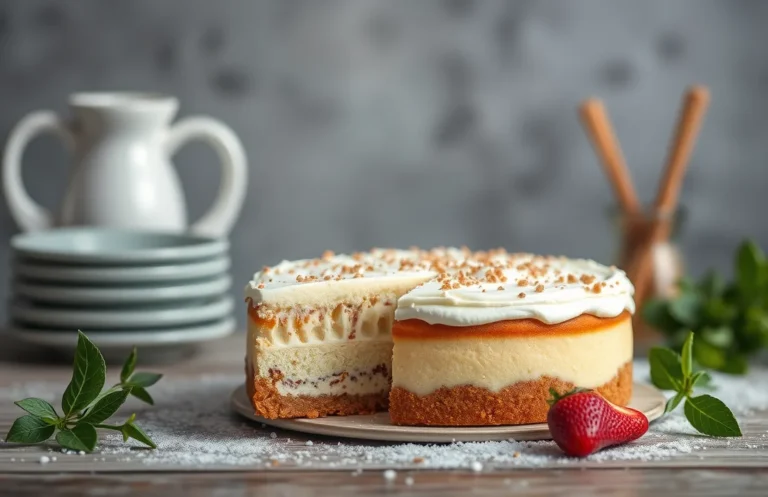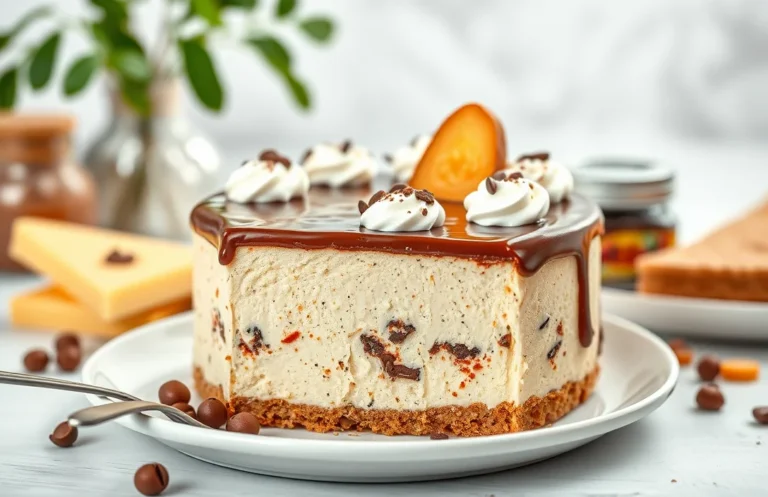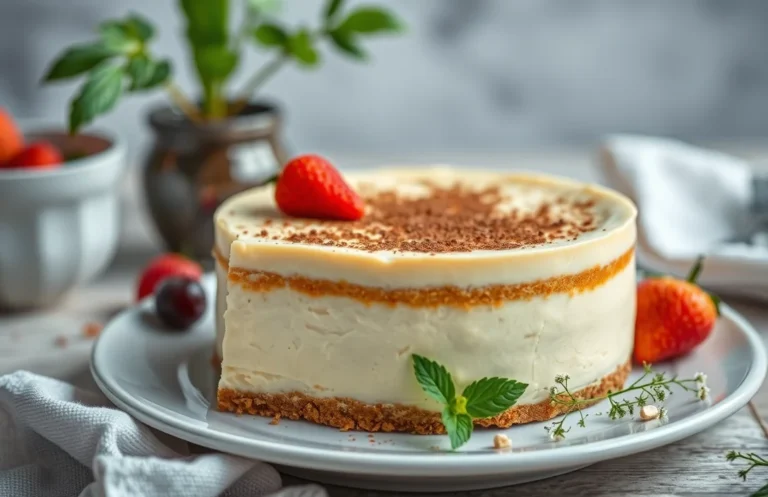
Do Cheesecakes Use Eggs? Discover Recipes Without Eggs Here!
Cheesecake is one of those desserts that never fails to impress. Its creamy texture and rich flavor make it the perfect treat for any occasion, whether you’re hosting a dinner party or simply indulging after a long day. There’s nothing quite like a slice of velvety cheesecake that melts in your mouth!
Curious about if cheesecake has eggs? You’ll find the answers here, along with a traditional recipe and an egg-free version. Expect clear measurements, cooking times, and tips to ensure your cheesecake turns out perfectly each time.
| Prep Time | 15 minutes |
|---|---|
| Cook Time | 60 minutes |
| Total Time | 1 hour 15 minutes |
| Servings | 8 slices |
| Difficulty | Medium |
Cheesecake Origins
Cheesecake is a beloved dessert with a rich history that spans cultures and centuries. Understanding its origins helps clarify the role of ingredients like eggs in traditional recipes and highlights the diverse variations that exist today.
History of Cheesecake
The earliest known cheesecake dates back to ancient Greece, where it was served to athletes during the first Olympic Games in 776 B.C. The Greeks used simple ingredients such as cheese, flour, and honey, creating a sweet dish that was both nourishing and delightful.
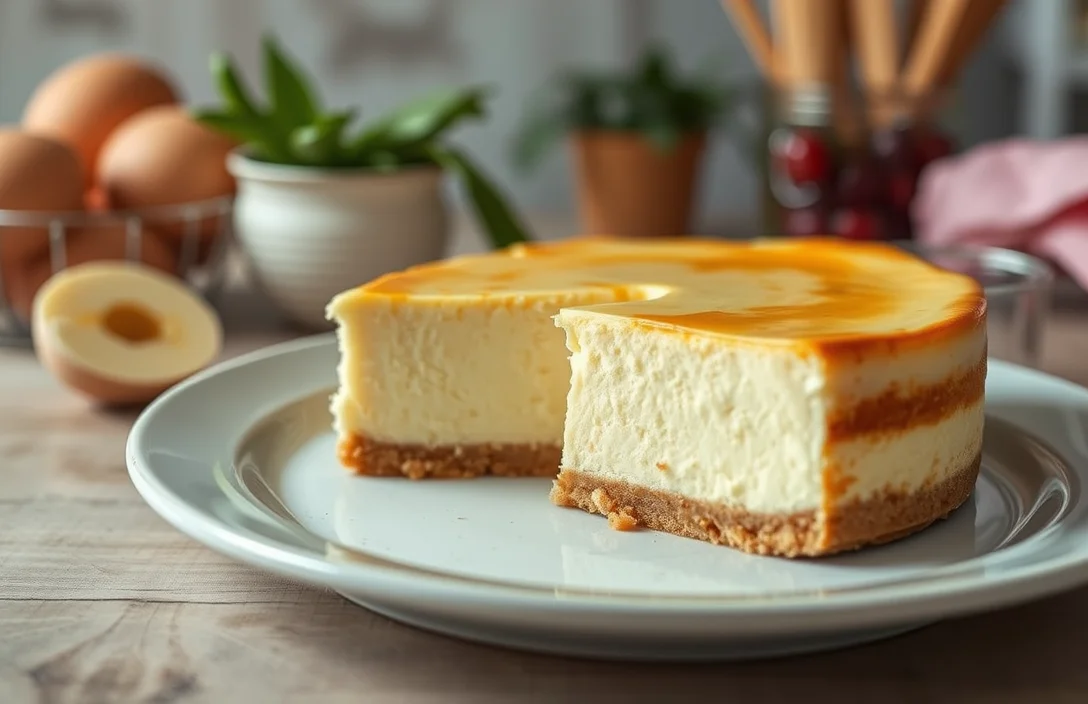
As cheesecake spread throughout Europe, it evolved significantly. The Romans adopted and adapted the recipe, introducing eggs to create a richer texture. This addition became a hallmark of many modern versions, particularly in the United States. Today, New York-style cheesecake is famous for its creamy consistency, largely due to the inclusion of eggs.
Cultural Variations
- New York Cheesecake: Thick and creamy, this version typically includes eggs for structure.
- Italian Ricotta Cheesecake: Made with ricotta cheese, often lighter and may or may not use eggs.
- Japanese Cheesecake: Fluffy and soufflé-like, often uses meringue made from egg whites.
- No-Bake Cheesecake: A fresh take that usually omits eggs altogether, relying on gelatin for structure.
Chef’s tip: If you’re looking to make a cheesecake without eggs, opt for a no-bake version using cream cheese and whipped cream for a light texture.
Understanding these origins and variations can help you decide whether to incorporate eggs in your cheesecake recipe or explore delicious alternatives that suit your dietary preferences.
Ingredients List
This section outlines the essential ingredients for both traditional and egg-free cheesecakes. Understanding the role of each ingredient, particularly eggs, is crucial for achieving the perfect texture and flavor in your cheesecake.
Traditional Cheesecake Ingredients
| Item | Amount/Specification | Notes |
|---|---|---|
| Graham cracker crumbs | 1 ½ cups (150g) | For the crust |
| Sugar | ¼ cup (50g) | For crust |
| Unsalted butter | ½ cup (113g), melted | For crust |
| Cream cheese | 24 oz (680g) | Softened to room temperature |
| Sour cream | 1 cup (240g) | For creaminess |
| Granulated sugar | 1 cup (200g) | For filling |
| Vanilla extract | 1 tablespoon (15ml) | For flavor |
| Eggs | 3 large | For binding and structure |
Egg-Free Cheesecake Ingredients
| Item | Amount/Specification | Notes |
|---|---|---|
| Graham cracker crumbs | 1 ½ cups (150g) | For the crust |
| Sugar | ¼ cup (50g) | For crust |
| Unsalted butter | ½ cup (113g), melted | For crust |
| Tofu (silken) | 16 oz (450g) | For filling, blended until smooth |
| Sour cream or Greek yogurt | 1 cup (240g) | For creaminess |
| Granulated sugar | 1 cup (200g) | For filling |
| Vanilla extract | 1 tablespoon (15ml) | For flavor |
| Arrowroot powder | 2 tablespoons (16g) | To help set the filling |
Required Kitchen Equipment
In this section, we’ll cover the essential tools you’ll need to make a cheesecake, whether it includes eggs or not. Having the right equipment can streamline your preparation and ensure your dessert turns out perfectly.
- Springform Pan: A 9-inch springform pan is crucial for cheesecakes, as it allows you to easily remove the cake without damaging it. Ensure the pan is well-greased with butter or lined with parchment paper to prevent sticking.
- Mixing Bowls: Use at least two mixing bowls—one for the crust ingredients and one for the cheesecake filling. A large bowl (about 4-quarts) is ideal for whisking together the cream cheese, sugar, and other filling ingredients.
- Electric Mixer: An electric hand mixer or stand mixer will make the process of creaming the cheese and sugar much easier. Mix on medium speed until the mixture is smooth and fluffy, about 3-4 minutes. This step is essential for a creamy texture.
- Rubber Spatula: You’ll need a rubber spatula to scrape down the sides of your mixing bowl to ensure all ingredients are incorporated. This tool is also handy for spreading the cheesecake filling evenly in the pan.
- Measuring Cups and Spoons: Accurate measurements are key to baking success. Have a set of dry measuring cups (for flour and crumbs) and liquid measuring cups (for melted butter) ready to ensure precision.
- Oven and Thermometer: Preheat your oven to the required temperature, typically 325°F (163°C) for cheesecakes. An oven thermometer can help you check that your oven is at the right temperature, as accuracy is important in baking.
Cooking Instructions
This section will guide you through the step-by-step process of making both traditional cheesecakes that include eggs and delicious egg-free alternatives. Understanding these methods is crucial for achieving the perfect texture and flavor in your cheesecake.
Traditional Cheesecake Steps
- Prepare the crust: Preheat your oven to 350°F (175°C). In a medium bowl, combine 1 ½ cups of graham cracker crumbs, ⅓ cup of granulated sugar, and ⅓ cup of melted unsalted butter. Mix until the crumbs are evenly coated and resemble wet sand. Press the mixture firmly into the bottom of a 9-inch springform pan.
- Bake the crust: Place the crust in the preheated oven and bake for 10 minutes until lightly golden. Allow it to cool while preparing the filling. The crust should be crisp and fragrant.
- Make the filling: In a large mixing bowl, beat 4 (8-ounce) packages of cream cheese at room temperature until smooth. Gradually add 1 cup of granulated sugar, 1 teaspoon of vanilla extract, and 4 large eggs. Mix on low speed until just combined, ensuring not to overmix. The batter should be creamy and fluffy.
- Bake the cheesecake: Pour the filling over the cooled crust and smooth the top with a spatula. Bake for 50-60 minutes until the edges are set but the center still has a slight jiggle. The cheesecake should be lightly browned on top.
- Cool and chill: Turn off the oven and crack the door to let the cheesecake cool for 1 hour. Afterward, refrigerate for at least 4 hours or overnight to set completely. The cheesecake should be firm to the touch and have a silky texture.
Egg-Free Cheesecake Steps
- Prepare the crust: Follow the same steps as the traditional cheesecake crust above, using the same ingredients and baking instructions.
- Make the filling: In a mixing bowl, combine 2 (8-ounce) packages of cream cheese, 1 cup of sugar, 1 teaspoon of vanilla extract, and ½ cup of sour cream. Mix until smooth. To replace the eggs, add ½ cup of unsweetened applesauce or ¼ cup of cornstarch mixed with ½ cup of water to create a creamy consistency.
- Bake the cheesecake: Pour the egg-free filling over the crust and bake at 350°F (175°C) for 45-50 minutes. The edges should be set while the center remains slightly wobbly. The top should be lightly browned.
- Cool and chill: Follow the same cooling and chilling instructions as the traditional version, ensuring it’s firm before serving.
Expert Tips
When it comes to making cheesecake, understanding the role of eggs is crucial for achieving that perfect creamy texture. This section will cover some expert tips to help you avoid common pitfalls and ensure your cheesecake turns out as delicious as possible.
Achieving Perfect Texture
- Use room temperature ingredients: Make sure your cream cheese, eggs, and any other dairy ingredients are at room temperature. This helps to create a smooth batter, eliminating lumps and ensuring even baking.
- Don’t overmix: While it’s important to thoroughly combine the ingredients, overmixing can introduce excess air, leading to cracks in the cheesecake. Mix just until combined, and you’ll achieve a denser, creamier texture.
- Bake in a water bath: To promote even cooking and prevent cracking, consider using a water bath. Wrap the bottom of your springform pan in aluminum foil and place it in a larger pan filled with hot water during baking. This creates a gentle humidity that helps maintain moisture.
Common Mistakes to Avoid
- Skipping the chilling step: After baking, let your cheesecake cool in the oven with the door ajar for about an hour. This gradual cooling process helps prevent cracks when you transfer it to the fridge. Follow with at least 4 hours of chilling before slicing.
- Overbaking: Bake your cheesecake until the edges are set but the center still jiggles slightly. It should be soft to the touch and not puffed up. Overbaking will result in a dry texture.
- Ignoring ingredient quality: The choice of cream cheese is vital. Always opt for a high-fat cream cheese for the best flavor and texture. Low-fat or non-fat versions can lead to a gummy or overly dense cheesecake.
Variations and Substitutions
Cheesecake can be adapted to fit various dietary needs or preferences, especially concerning the use of eggs. Traditional cheesecakes typically include eggs for structure and richness, but there are delicious alternatives for those who are gluten-free or vegan. Here’s how you can adjust your cheesecake recipe to cater to these dietary considerations.
Gluten-Free Options
If you need a gluten-free cheesecake, the good news is that you can easily substitute the crust and filling to suit your needs. Here’s how:
- For the crust: Replace regular graham cracker crumbs with gluten-free graham cracker crumbs or almond flour. Use 1 ½ cups (150g) of gluten-free crumbs mixed with ½ cup (100g) of melted butter.
- For the filling: Ensure all other ingredients like cream cheese and sugar are gluten-free. Most are, but always double-check labels.
Vegan Alternatives
To make a vegan cheesecake that omits eggs, you can use the following substitutions:
- Cashews: Soak 1 ½ cups (225g) of raw cashews in water for at least 4 hours, then blend with 1 cup (240ml) of coconut cream, ½ cup (100g) of maple syrup, and 2 tablespoons of lemon juice until smooth.
- Tofu: Use 1 block (14oz or 400g) of silken tofu blended with the other filling ingredients for creaminess and structure.
Chef’s tip: If your vegan cheesecake is too runny, add a tablespoon of cornstarch mixed with water to thicken the filling.
| Ingredient | Traditional Cheesecake | Gluten-Free Option | Vegan Option |
|---|---|---|---|
| Crust | 1 ½ cups graham cracker crumbs | 1 ½ cups gluten-free crumbs | 1 ½ cups almond flour |
| Filling | 2 large eggs | Omit eggs | 1 block silken tofu or 1 ½ cups soaked cashews |
Serving Suggestions
Serving your cheesecake just right can elevate its appeal, making it not only delicious but visually enticing. Here are some plating ideas and pairing recommendations that complement your cheesecake, whether it contains eggs or is an egg-free version.
Plating Ideas
- Chilled Presentation: Serve your cheesecake directly from the refrigerator on a chilled plate. This helps maintain its structure and enhances the creamy texture. A slice should be firm yet creamy, and the crust should have a nice contrast in texture.
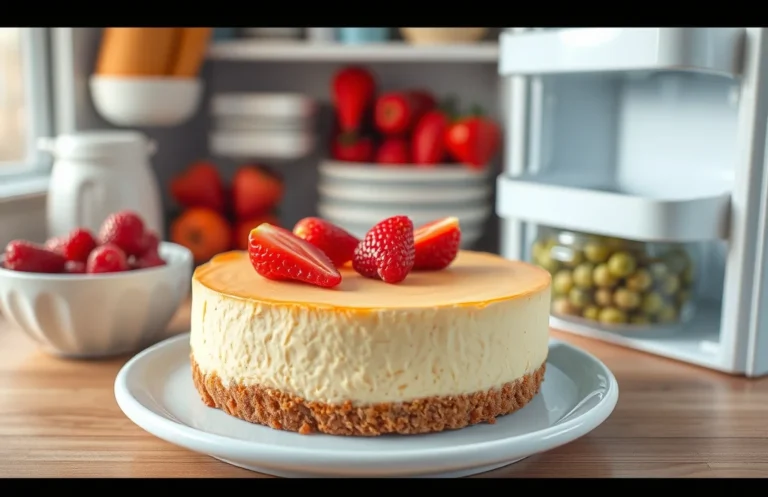
- Garnish with Fresh Fruits: Top each slice with fresh berries like strawberries, blueberries, or raspberries. Their vibrant colors and tartness provide a beautiful contrast to the rich, creamy cheesecake.
- Chocolate Drizzle: Drizzle melted chocolate or a chocolate sauce over the top just before serving for an indulgent touch. It adds a glossy finish and a delightful flavor pairing.
Pairing Recommendations
- Coffee or Espresso: A strong cup of coffee or a shot of espresso pairs beautifully with the richness of cheesecake. The bitterness of the coffee balances the sweetness perfectly.
- Fruit Sauces: Serve with a side of homemade fruit sauce, such as raspberry or blueberry coulis. The tartness of the sauce contrasts wonderfully with the creamy cheesecake.
- Whipped Cream: A dollop of lightly sweetened whipped cream on top adds a lightness to every bite. Ensure the cream is fluffy and not too sweet to maintain the balance of flavors.
Quick Summary
| Prep Time | 15 minutes |
|---|---|
| Cook Time | 60 minutes |
| Total Time | 1 hour 15 minutes |
| Servings | 8 |
- Check ingredients: Traditional cheesecake contains eggs for structure and creaminess.
- Preheat oven: Set to 325°F (163°C) for even baking.
- Mix thoroughly: Blend cream cheese and sugar before adding eggs to avoid lumps.
- Bake in a water bath: This helps prevent cracks in the cheesecake.
- Cool gradually: Let it cool in the oven for at least an hour to set properly.
- Chill before serving: Refrigerate for at least 4 hours for best texture.
- Tip 1: Use room temperature cream cheese for a smoother batter.
- Tip 2: Avoid overmixing after adding eggs to prevent a dense texture.
Frequently Asked Questions
Can I make this cheesecake ahead of time? How should I store it?
You can definitely make cheesecake ahead of time! Store it in the refrigerator, tightly covered, for up to 5 days.
What can I substitute for eggs in cheesecake?
If you’re looking for an egg substitute, you can use 1/4 cup of unsweetened applesauce or 1/4 cup of silken tofu blended until smooth for each egg.
How do I know when my cheesecake is done?
Your cheesecake is done when the edges are set and the center has a slight jiggle, which should take about 50-60 minutes at 325°F (163°C).
Can I freeze cheesecake? How long does it last?
Yes, you can freeze cheesecake for up to 2 months if wrapped tightly in plastic wrap and then aluminum foil to prevent freezer burn.
Why did my cheesecake crack on top?
Your cheesecake may crack due to overmixing or baking at too high a temperature, so aim for a gentle mix and keep your oven at 325°F (163°C).

- 10 Best Knife For Kayaking 2026 - September 13, 2026
- 10 Best Knife For Killing Chickens 2026 - September 13, 2026
- 10 Best Knife For Kids 2026 - September 13, 2026